Reservoir

This year’s selected papers showcase meaningful advances across condensate‑rich tight gas, tight sandstones, and coalbed methane reservoirs, each contributing new tools for improving predictability and field-development efficiency.

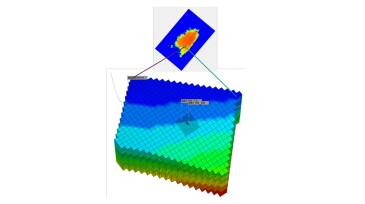
This paper presents a novel approach to predict reservoir porosity by conditioning seismic data, calibrating seismic impedance inversion, and tailoring rock-physics analysis.
This study aims to systematically assess casing integrity and corrosion risks associated with CO2 injection in oil-recovery operations.
-
 This paper presents the interpretation of two polymer-injectivity tests performed in two giant light-oil high-salinity/high-temperature carbonate reservoirs onshore Abu Dhabi.
 -
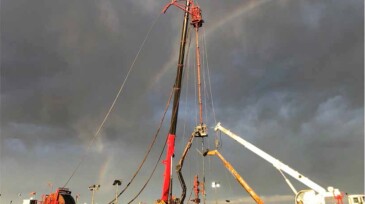
The authors describe a casing-leak-repair alternative to allow continued hydraulic fracturing of an unconventional formation.
-
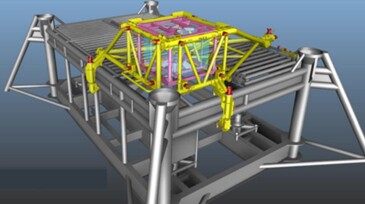
The authors describe coiled tubing operations that used a riser on a monohulled vessel already performing riserless interventions.
-
The paper describes the development of an alkaline/surfactant/polymer formulation for the Mangala field in India, which involved more than 30 corefloods.
-
In this paper, a comparison is presented of the range of production outcomes for Clair Phase 1 and Clair Ridge, including the potential downsides of relying on natural fractures.
-
This paper presents a novel mathematical model for design and evaluation of fluoroboric acid treatments that takes into account the chemical kinetics and equilibrium aspects of important reactions and fluid flow inside the reservoir rock.
-
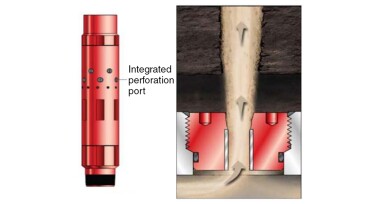
A dissolvable collet field tested in an unconventional completion led to an average running time of 32 minutes per stage in a vertical section and 19 minutes per stage in the horizontal section.
-
The rise in energy consumption and increasing demand for energy security worldwide warrants the need to increase global hydrocarbon production. Current circumstances dictate focusing on low-cost and low-carbon EOR barrels to secure energy supply in the shorter term while continuing to develop innovative technologies and strategies for enhancing production in the longe…
-
The first acid job dates to 1895. Challenges remain, however, when it comes to lithology, coverage, penetration, and management of reaction products. These themes remain a focus for stimulation engineers.
-
In Part 2 of a series of articles, the author focuses on generating a connection between the problem types and various methods of trying to solve these problems.