Reservoir

The events will be co-located 3–5 May 2027 at Reliant Park in Houston, Texas.

This case study describes how edge computing and industrial internet of things platforms were deployed to automate and optimize production operations across four distinct basins.
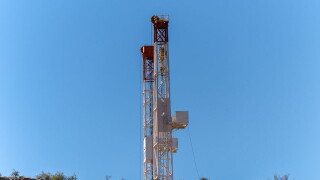
Output is rising fast in the South American shale play and putting Argentina on a course to soon reach 1 million B/D.
-
 In difficult times, there is naturally a focus on maximizing the operational efficiency of existing assets, including enhanced-oil-recovery (EOR) operations and looking for capital-efficient ways to increase the resource base in existing assets.
 -
The complete paper presents steps to accelerate enhanced oil recovery (EOR) in a Grimbeek field from a four-injector pilot to 80 new injectors in a rapid deployment.
-
The complete paper discusses the importance of adequate preparation and the approaches used to overcome challenges of EOR operations, including handling back-produced polymer.
-
New commentary from the SPE Reservoir Advisory Committee (RAC) provides key high-level insights on the potential consequences of long-term shut-ins on conventional and unconventional reservoirs.
-
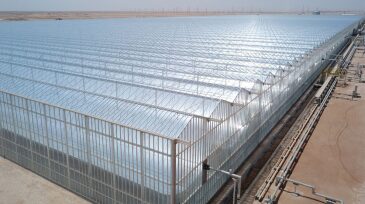
GlassPoint Solar was founded in 2008 to replace the use of natural gas for steamflooding heavy-oil reservoirs. But amid low energy prices, its chief investor has decided to pull the plug for good.
-
The silver lining for those overseeing the unprecedented shut ins of tight-oil wells is the potential to acquire a wealth of reservoir data. But first, petroleum engineers need to monitor these wells and use the right analysis toolbox.
-
A technical synopsis of major considerations for unconventional wells facing prolonged shut-ins. The review includes deciding factors for kill fluid selection and risks of incompatible fluid mixing.
-
As tight-oil producers move to curtail production, hard-to-answer questions are being raised about how shuttered wells will come back. The issue reveals key uncertainties about the delicate flow paths that define unconventional reservoirs.
-
Most history-matching studies have fixed resources—that is, the team of engineers and geoscientists is predetermined. Moreover, the deadlines are always very strict. This constrained scenario often leads to an unfortunate result: The quality of the study suffers.
-
Not everybody suffers when US oil producers slash production. Among the beneficiaries could be US gas producers who will benefit because less oil production will mean a lot less gas on the US market.