Reservoir

Three papers are highlighted as the primary contributions because of their broad industry relevance. They focus on improving formation particle-size characterization, expanding the application of openhole gravel packs in depleted and compartmentalized reservoirs, and advancing the understanding of capillary pressure in sand production.

This paper aims to establish a set of best practices for generating particle-size-distribution data from core samples.

This paper discusses the successful execution of two openhole gravel-pack completions in two Gulf of Mexico fields with depleted reservoirs.
-
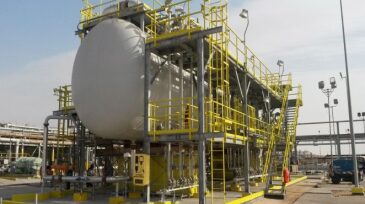
 A pilot project demonstrates that facilities design plays an important role in providing sources of CO2 for the gas-handling process for injection into a carbonate formation as a tertiary recovery mechanism.
 -
A demonstration project of carbon capture, utilization, and storage through enhanced oil recovery was conducted in Saudi Arabia. Surface facilities for such projects are expensive to build and involve tradeoffs in options based on economics for a given set of conditions.
-
Shale explorers run very few logs into horizontal wells, making it difficult to understand the effects of reservoir depletion in tightly spaced wells. This new technology is trying to change that.
-
Operators are working with a young startup company to overhaul how the unconventional sector has traditionally interpreted one the most common tests used to influence well completion designs.
-
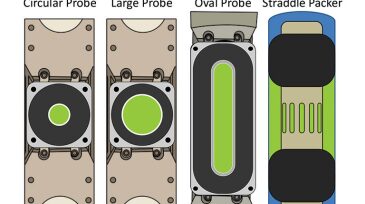
This paper bridges the gap between operational petrophysicists and FTS specialists, introducing an automated work flow by which petrophysicists can conduct FTS jobs.
-
The rise of cube developments in the Permian Basin has introduced a new way of thinking for some of the region’s biggest players.
-
Seismic stimulation, achievable with the implementation of a single tool, requires significantly lower investments than gas, thermal, and chemical injection methods, with minimal environmental impact.
-
This paper aims to develop new and improved empirical viscosity correlations through available field measurements on the Norwegian Continental Shelf (NCS).
-
What effects will Industrial Revolution 4.0 have on the upstream oil and gas businesses in general and petrophysics in particular? We should see more intelligence and automation in measurements, processes, work flows, and operations.
-
An international committee of reserves evaluation experts has completed the revision of the Petroleum Resources Management System (PRMS). The SPE Board approved it in June 2018.