Reservoir

Three papers are highlighted as the primary contributions because of their broad industry relevance. They focus on improving formation particle-size characterization, expanding the application of openhole gravel packs in depleted and compartmentalized reservoirs, and advancing the understanding of capillary pressure in sand production.

This paper aims to establish a set of best practices for generating particle-size-distribution data from core samples.

This paper discusses the successful execution of two openhole gravel-pack completions in two Gulf of Mexico fields with depleted reservoirs.
-
 ConocoPhillips and Statoil Petroleum have signed a joint-sponsorship-development agreement with Visuray Technology to fund development of a downhole cement-integrity-evaluation technology that will have the capability of evaluating cement integrity even behind multiple casing strings.
 -
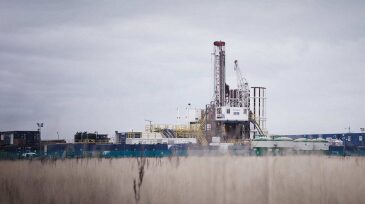
Overcoming numerous regulatory hurdles, Cuadrilla Resources is pressing ahead with its plans to fracture a well in the UK for the first time since 2011.
-
Widely held images of what happens when a well is fractured often bear little resemblance to what actually happens underground.
-
Shale gas is one of least sustainable options for producing electricity, according to new research from The University of Manchester, which considered environmental, economic, and social sustainability factors.
-
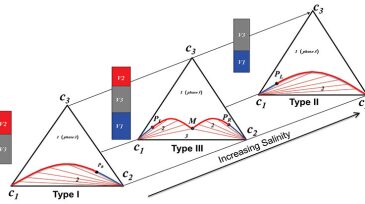
Progress in chemical EOR, from polymer to alkaline/surfactant/polymer, has been significant. Not only are there new chemicals with improved recovery capabilities, but also the cost of the chemicals is being reduced continuously. All those factors led to more operators using chemical EOR.
-
The complete paper presents a new three-phase relative permeability model for use in chemical-flooding simulators.
-
In the complete paper, three stages of review have been combined to find out the applicability of the most-feasible improved-oil-recovery (IOR) methods in North American unconventional reservoirs.
-
In the complete paper, a new assessment of the WAG-hysteresis model, which was developed originally for water-wet conditions, was carried out by automatic history matching of two coreflood experiments in water-wet and mixed-wet conditions.
-
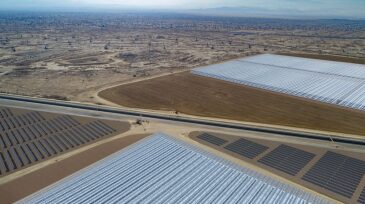
If proven economic, solar EOR technology could represent an environmentally and energy friendly solution for California’s heavy oil producers.
-
Early field tests suggest chemical treatments may be able to significantly increase production from unconventional formations.