Reservoir

Canada’s development of large-scale digital drilling core libraries and open geoscience data platforms follows approaches pioneered in Australia, particularly Western Australia, through decades of government investment in geoscience data collection and preservation.

This paper aims to establish a set of best practices for generating particle-size-distribution data from core samples.

This study explores the carbon-capture and mineralization potential of ultramafic rock powders when exposed to flue gases generated from combustion of crude oil and mesquite-derived charcoal.
-
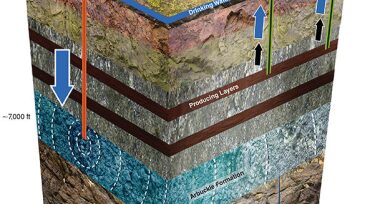
 Industry regulators in Oklahoma have rolled out broad new restrictions on more than 600 disposal wells as part of the largest action of its kind taken in response to earthquakes.
 -
Permanent downhole gauges (PDGs) can provide a continuous record of flow rate and pressure, which provides extensive information about the reservoir. In this work, a machine-learning framework based on PDG data was extended to two applications: multiwell testing and flow-rate reconstruction.
-
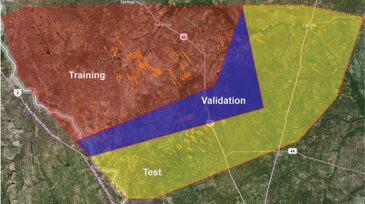
The authors present a geology-driven deep-learning estimated-ultimate-recovery (EUR)-prediction model for multistage hydraulically fractured horizontal wells in tight gas and oil reservoirs.
-
With the recent drop in oil prices, operators are shifting to optimization of existing assets with minimal costs. For mature floods (water, chemical, and CO2), one low-cost optimization strategy is the intelligent adjustment of well-rate targets.
-
History matching is only one part of something more comprehensive—reservoir modeling.
-
In this paper, the authors derive and implement an interwell numerical simulation model (INSIM) that can be used as a calculation tool to approximate the performance of a reservoir under waterflooding.
-
In this paper, the authors introduce a novel semianalytic approach to compute the sensitivity of the bottomhole pressure (BHP) data with respect to gridblock properties.
-
This paper critically investigates the impact of using realistic, inaccurate simulation models. In particular, it demonstrates the risk of underestimating uncertainty when conditioning real-life models to large numbers of field data.
-
When it comes to hydraulic fracturing, steadiness may not be a virtue. That was the conclusion of a test to see if rapid pump rate variations would lead to greater production than conventionally fractured stages when the pressure was held steady.
-
The importance of reducing emissions of methane, a short-lasting but powerful atmospheric greenhouse gas (GHG), received close attention from panelists at an IHS CERAWeek strategic dialogue, Tightening the Valves on Global Methane Emissions.