Reservoir

Three papers are highlighted as the primary contributions because of their broad industry relevance. They focus on improving formation particle-size characterization, expanding the application of openhole gravel packs in depleted and compartmentalized reservoirs, and advancing the understanding of capillary pressure in sand production.

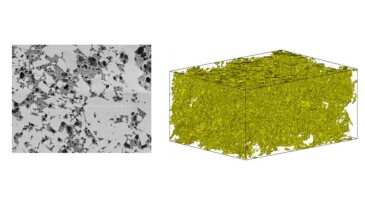
This paper aims to establish a set of best practices for generating particle-size-distribution data from core samples.

This paper discusses the successful execution of two openhole gravel-pack completions in two Gulf of Mexico fields with depleted reservoirs.
-
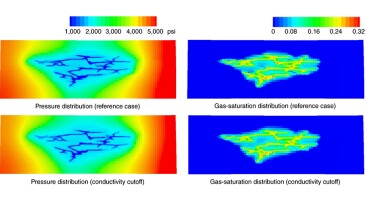
 The authors of this paper present an advanced dual-porosity, dual-permeability (A-DPDK) work flow that leverages benefits of discrete fracture and DPDK modeling approaches.
 -
This paper adds to ongoing research in hydrogen storage, focusing on efficient extraction of hydrogen to be stored potentially in depleted unconventional formations.
-
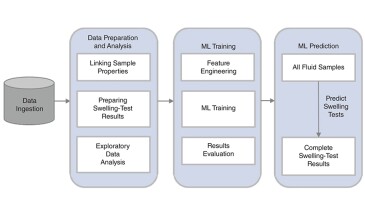
The authors of this paper present a machine-learning-based solution that predicts pertinent gas-injection studies from known fluid properties such as fluid composition and black-oil properties.
-
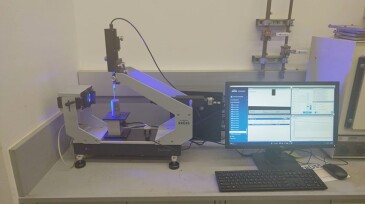
This study presents a novel approach to screen thermally stable surfactants at high pressures and high temperatures for the explicit purpose of wettability alteration in the operator’s Eagle Ford acreage.
-
The authors of this paper develop an integrated technical approach that can be used to unlock one of the largest undeveloped resources in an operator’s portfolio.
-
Highlights of innovations in fracturing, drilling, and reservoir engineering include mysterious gummy bears, horseshoe-shaped wells, and automated rigs.
-
The “Western Haynesville” boasts big gas IPs with potential running room.
-
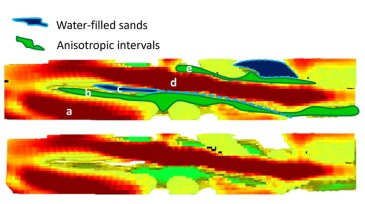
The authors of this paper describe an approach in which all available technologies are combined to improve understanding of reservoir depositional environments.
-
An engineered approach to fracture growth in hydraulic fracturing highlights the successful execution of H2S prevention strategies in North Dakota’s Williston Basin.
-
The authors of this paper describe a project aimed at automating the task of cuttings descriptions with machine-learning and artificial-intelligence techniques, in terms of both lithology identification and quantitative estimation of lithology abundances.