Reservoir

Coreflood experiments reveal that alkali significantly reduces viscosity loss in polyacrylamide flooding systems by minimizing adsorption and improving polymer stability under shear stress. The findings position viscosity retention as a key screening criterion for successful alkali-polymer enhanced-oil-recovery applications.

This SPE technical section editorial synthesizes six technical themes shaping CO2 transport and storage and interprets them through a petroleum engineering capability lens.

The UAE project is expected to produce up to 345 MMscf/D by 2029, with expansion potential to 1 Bcf/D.
-
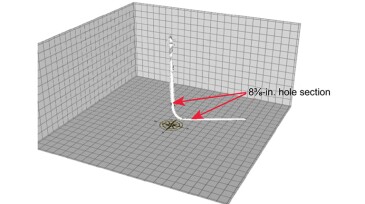
 The authors write that simple changes in drillstring design can lead to huge savings in a climate that demands continual reductions in well-delivery time and well costs.
-
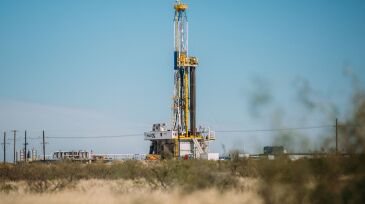
Nabors' RZR-equipped rig has successfully drilled multiple horizontal wells in the Permian Basin.
-
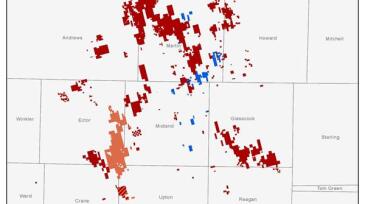
The Permian Basin operator said the purchase ‘checks all the boxes’ it looks for in an acquisition.
-
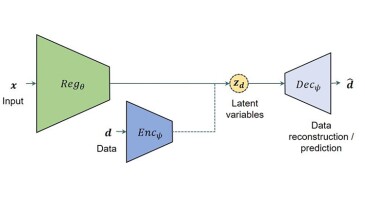
Large geological models are needed for modeling the subsurface processes in geothermal, carbon-storage, and hydrocarbon reservoirs. The size of these models contributes to the computational cost of history matching, engineering optimization, and forecasting. To reduce this cost, low-dimensional representations need to be extracted. Deep-learning tools, such as autoenc…
-
Seven facilities design and public engagement principles are identified as key elements for the future oil and natural gas production facilities for the DJ Basin, and maybe even as a guide for other North American onshore shale basins.
-
The deal upon closing at year-end would expand Marathon’s position in the south Texas shale play by 130,000 net acres.
-
This paper presents a numerical simulation work flow, with emphasis on hydraulic fracture simulation, that optimizes well spacing and completion design simultaneously.
-
Recent studies have reignited the question of whether US oil and gas companies are ignoring the opportunity to refracture large swaths of maturing assets.
-
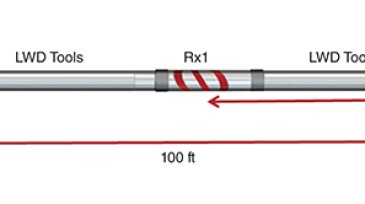
This paper describes the deployment of an ultradeep electromagnetic directional-resistivity instrument to map injection-water movement.
-
The authors discuss the development of a deep-learning model to identify errors in simulation-based performance prediction in unconventional reservoirs.