Reservoir

As Egypt’s largest oil and gas investor, Eni is ramping up its 2026–2027 drilling campaign with new investments cross the Mediterranean offshore, Nile Delta, Western Desert, and offshore Sinai to strengthen the country’s role as a regional gas and LNG export hub.

The industry is no longer short of measurements; the real challenge is converting them into timely reservoir decisions that protect value. That challenge is becoming more urgent as the industry depends increasingly on mature fields and existing infrastructure. The selected papers show how this need is being addressed across different producing regions.

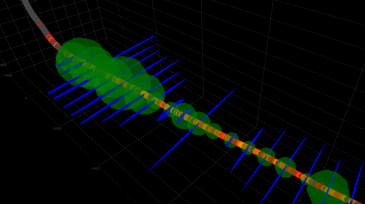
This paper presents a case study from a mature field redevelopment project where pulsed neutron logging was integrated with advanced reservoir modeling to improve the understanding of fluid-contact dynamics and optimize new horizontal well placement.
-
 The state-run offshore company has found a gas and condensate field that holds an estimated 250 million BOE.
 -
Using drilling data and a downhole acoustic signal, developers aim to assess unconventional fracture networks in real time and give engineers ability to customize each stage.
-
The country continues to step up its delivery of shale gas, but has a long ways to go to meet the government's target.
-
BP announced four discoveries in the Gulf of Mexico near existing platforms. It use advanced seismic imaging to identify resources in deepwater locations that can be developed cost effectively using platforms nearby.
-
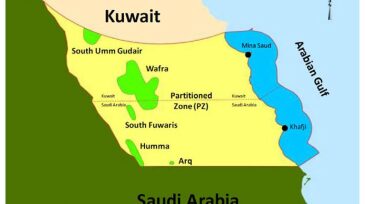
The First Eocene is a multibillion-barrel heavy-oil carbonate reservoir in the Wafra field, located in the Partitioned Zone between Saudi Arabia and Kuwait. After more than 60 years of primary production, expected recovery is low and provides a good target for enhanced-oil-recovery processes.
-
This paper studies the technical and economic viability of this EOR technique in Eagle Ford shale reservoirs using natural gas injection, generally after some period of primary depletion, typically through long, hydraulically fractured horizontal-reach wells.
-
As operators and asset owners worked continually to increase efficiency in oil production, they all realized that part of efficiency improvement is increasing recovery factors. Everybody now is extremely focused on recovering more from the reservoirs they have.
-
This paper provides a robust methodology for miscible CO2 WAG experimental-data acquisition and history matching.
-
This paper describes a case study of the Chonskaya group of fields to demonstrate an approach to the integration of time-domain-electromagnetic (TDEM) electrical and seismic data when building a geological model for improving reservoir-property and -saturation prediction.
-
To the best of the authors’ knowledge, this is the first surface-complexation-based model that describes fully ionic compositional dependence observed in ionically treated waterfloods in both sandstones and carbonates.