Reservoir

As Egypt’s largest oil and gas investor, Eni is ramping up its 2026–2027 drilling campaign with new investments cross the Mediterranean offshore, Nile Delta, Western Desert, and offshore Sinai to strengthen the country’s role as a regional gas and LNG export hub.

This paper presents an experiment investigating dissolution of basaltic primary minerals and conditions favorable for secondary phase formation under deep subsurface storage conditions.

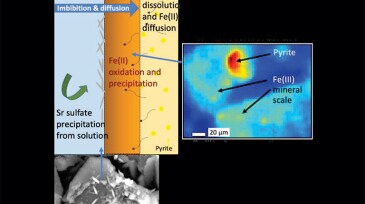
This study aims to investigate the efficacy of chemical additives strontium chloride and barium hydroxide in accelerating CO₂ trapping mechanisms, their effect on dissolution of carbonate-bearing minerals, and resulting poroelastic changes in the host rock.
-
 The obsession with better hydraulic fracturing has steadily pushed on shale production in year one, but the decline remains steep. Chemistry could help explain, and perhaps extend, the short productive life of these wells.
 -
Traditionally, wireline or logging-while-drilling formation-testing technology has been the most accepted means of reservoir fluid characterization. But when those fluids are contaminated by mud filtrate, acoustic data can be used for fluid characterization during downhole sampling to successfully track and quantify small changes in oil compressibility.
-
This paper discusses the field implementation of a downhole chemical methodology that has positively affected overall productivity for a mature Kuwait field.
-
This paper presents a comprehensive comparison of two modeling-based approaches of fluid tracking for condensate allocation and gas usage.
-
This paper describes a technique used to derive stresses for a gas-storage field and then calibrate the 1D mechanical earth model of the field.
-
The authors report that nanopolysilicon can be used effectively as a depressurizing, injection-increasing agent.
-
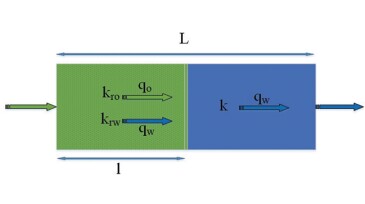
The authors develop and apply a laboratory protocol mimicking leakoff, shut-in, and flowback processes to evaluate the effects of fracturing-fluid additives on oil regained permeability.
-
Recent history has taught the unconventional sector that overly optimistic production forecasts can backfire. Going forward, one solution may be to combine financial and subsurface models to better communicate expectations.
-
Just as US natural gas prices reach multiyear highs, Chesapeake Energy moves to become this region's largest producer.
-
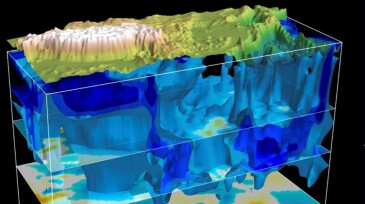
The US Department of Energy’s Office of Fossil Energy and Carbon Management awarded a total of $600,000 to four software developers who won a contest to support FECM’s Science-Informed Machine Learning to Accelerate Real-Time Decisions in the Subsurface Initiative.