Reservoir

As Egypt’s largest oil and gas investor, Eni is ramping up its 2026–2027 drilling campaign with new investments cross the Mediterranean offshore, Nile Delta, Western Desert, and offshore Sinai to strengthen the country’s role as a regional gas and LNG export hub.

The industry is no longer short of measurements; the real challenge is converting them into timely reservoir decisions that protect value. That challenge is becoming more urgent as the industry depends increasingly on mature fields and existing infrastructure. The selected papers show how this need is being addressed across different producing regions.

This paper presents a case study from a mature field redevelopment project where pulsed neutron logging was integrated with advanced reservoir modeling to improve the understanding of fluid-contact dynamics and optimize new horizontal well placement.
-
 Automated image-processing algorithms can improve the quality and speed in classifying the morphology of heterogeneous carbonate rock. Several commercial products have produced petrophysical properties from 2D images and, to a lesser extent, from 3D images.
 -
Though shelved by low oil prices, the plan to execute the largest enhanced oil recovery program of its kind offers insights into what it may take for the shale sector to escape pilot mode and scale up gas huff ’n’ puff operations.
-
With reduced new unconventional well activity, practices such as frac-hit mitigation—pressurization of parent wells during child-well fracture stimulation—have become increasingly important to reduce parent-well proppant cleanouts as well as to maximize production from both parent and child wells.
-
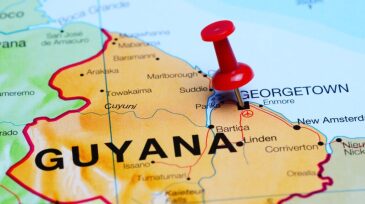
This latest find means the offshore driller has averaged at least three new discoveries each year since it began drilling offshore Guyana where it plans to recover up to 8 billion barrels of crude.
-
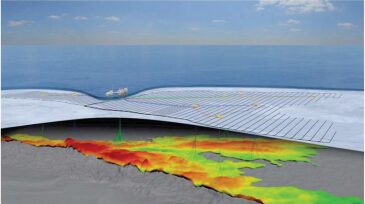
Unconventional producers around the world have been hamstrung by expensive and cumbersome options when it comes to obtaining reservoir data. Among the latest ways to break past these barriers is a new method developed by Canadian researchers and field tested in Australia’s unconventional frontier.
-
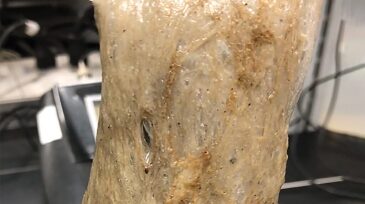
The source of gummy, damaging polymer gunk that has flowed from Oklahoma oil wells is becoming clear, and one of the lessons learned is that shale plays require petroleum engineers to learn more about chemistry.
-
Before the giant Johan Sverdrup field had produced even one barrel of oil, operator Equinor and its license partners set a recovery ambition of greater than 70% for the field.
-
Decline-curve analysis is one of the more widely used forms of data analysis that evaluates well behavior and forecasts production and reserves. This paper presents technologies that apply DCA methods to wells in an unbiased, systematic, intelligent, and automated fashion.
-
While the ongoing trends in data science and engineering analytics are going to show more benefits in lowering production costs and increasing efficiencies, the well-established reservoir and production engineering disciplines will continue to be critical for reservoir performance improvements.
-
The complete paper discusses optimization of a development plan involving low-salinity water injection.