Reservoir

The technology has passed its first phase of qualification, with 84 nodes placed on the seafloor at a depth of 2,000 m to acquire 4D seismic data in the pre-salt Santos Basin.

Chevron and Halliburton describe how they built and deployed the fully autonomous closed-loop fracturing system that enables subsurface-driven optimization.

This article from the SPE Integrated Reservoir Management Technical Section (IRMTS) addresses decision timing across the reservoir cycle.
-
 A decade ago, SPE defined key R&D and technology challenges for the industry. To address the more uncertain environment of the 2020s and beyond, we have updated the grand challenges via a January 2023 SPE workshop.
 -
The objective of this study was to establish an efficient optimization work flow to improve vertical and areal sweep in a sour-gas injection operation, thereby maximizing recovery under operation constraints.
-
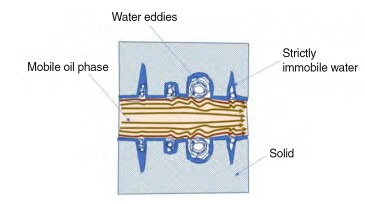
The objective of this paper is to present a fundamentals-based model of three-phase flow consistent with observation that avoids the pitfalls of conventional models such as Stone II or Baker’s three-phase permeability models.
-
CNPC’s record-breaking 11,100-m exploration borehole in the Taklamakan Desert promises to unlock the science of producing oil and gas trapped in the world’s deepest reservoirs.
-
As the demand for energy continues to increase, so does the sociopolitical demand that these resources be produced in a sustainable way. This reflective thought has defined this month’s selection of technical papers, each speaking to a different facet of this feature’s theme: unconventional reservoir development for a sustainable energy transition.
-
This paper describes natural fractures and their effect on hydrocarbon productivity in the Vaca Muerta shale formation.
-
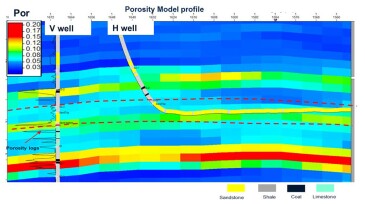
The authors of this paper describe a solution using machine-learning techniques to predict sandstone distribution and, to some extent, automate the process of optimizing well placement.
-
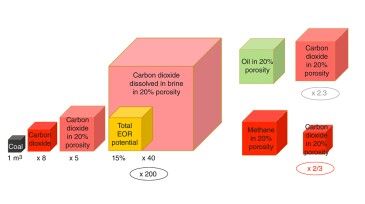
This study catalogs global gas/oil ratio data to identify currently produced light crude oils that could be rendered carbon neutral through the direct-air-capture mechanism.
-
A new program offers an affordable way to figure out if salt precipitation could be behind underperforming gas wells and suggests a path to higher production.
-
DJ Basin player enters the Permian Basin with a pair of asset purchases from private-equity vehicles.