Reservoir
This study demonstrates how routinely acquired downhole temperature data allows for direct estimation of fluid saturations and delivers more accurate reservoir volume assessments, particularly in aquifer-supported systems.

Sponsored
Effective data analysis depends on seeing connections that matter. Explore how Spotfire enables a more intuitive approach to understanding petroleum data.

The deal adds over 1,000 potential drilling locations and almost doubles oil production for Houston-based Magnolia.
-
 A fast, integrated reservoir modeling tool used by Eni at Norway’s Goliat field generated an ensemble of models that helped confirm the location of previously identified infill drilling targets and identify several new infill locations.
 -
We report a novel type of viscosity modifier relying on the supramolecular assemblies that have pH-adjustable viscosities and robust tolerance against high temperatures and salinities, and are resistant to shear-induced degradation.
-
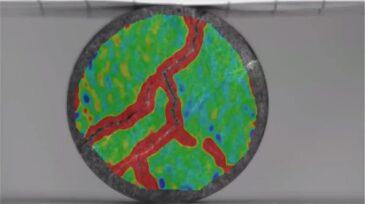
Technology that allows researchers to see stress forming inside rock samples may help unravel some of the mysteries associated with fracture behavior.
-
Getting a good well for a field test can make or break a new idea. A government backed research group in Saskatchewan is offering up to CAD 100,000 break on royalty payments to test ways to extend the life of conventional, heavy-oil fields.
-
Advancement of the integration of seismic with other oilfield disciplines has been fueled by two factors. First, advances in seismic technologies naturally led to more-powerful integration. Second, developments in seismic were motivated in direct response to the needs of interpreters and engineers.
-
Cost optimization in heavy-oil production can be achieved through numerical modeling to suggest general optimal strategies and development plans or by using proper real-time data acquisition … for prompt decisions while operations are ongoing.
-
The authors used a high-quality digital-log data set to characterize reservoir quality accurately in the Niobrara and Codell Formations in the Denver-Julesberg (DJ) Basin.
-
The A East Haradh formation contains a 200-m-thick oil column of highly viscous oil, with viscosity ranging from 200 to 400,000 cp.
-
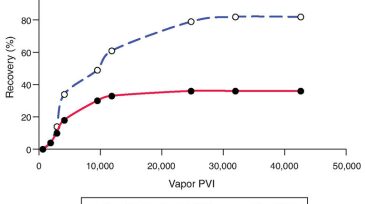
The most popular technology for producing heavy oil (HO) and bitumen is reservoir heating, mainly by steam injection.
-
This paper presents an investigation into the effect of catalytic nanoparticles on the efficiency of recovery from continuous steam injection.