Reservoir

This paper discusses waterflooding and field-development implications of subsea seawater treatment for improved oil recovery.

This paper presents laboratory-testing methods and evaluation criteria designed to improve understanding of both the origin and extent of formation damage associated with CO2 injection.

This paper details the design and implementation of a subsea multiphase pump solution deployed in the Atlanta field designed to maximize reuse of existing subsea and topside equipment.
-
 Samsung E&A takes home $6 billion of the total amount as EPC contractor.
 -
As the biggest US companies grow bigger, the advantage of scale becomes clearer.
-
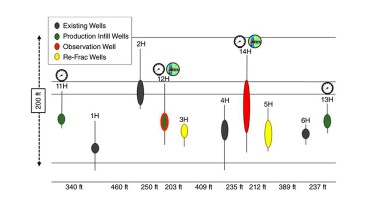
A 44-well development tests what ConocoPhillips has learned about maximizing the value of the wells by figuring out how they drain the reservoir.
-
This paper’s focus is a case study of an Eagle Ford refracturing project in which a range of completion designs were trialed with an approach using offset sealed wellbore pressure monitoring and fiber-optic strain.
-
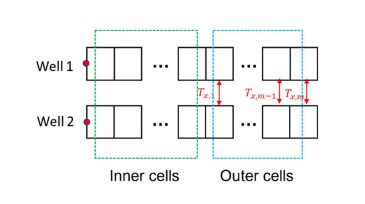
The authors of this paper propose a hybrid approach that combines physics with data-driven approaches for efficient and accurate forecasting of the performance of unconventional wells under codevelopment.
-
Despite tens of thousands of potential candidates and the proven upsides, the unconventional industry has largely overlooked refracturing—possibly due to the way it’s discussed.
-
The physical characteristics of heavy oil and the formations in which it is found are often unique to a region or even to a specific asset, so recovery techniques must be tuned, adapted, and sometimes invented for each region. Creative professionals around the world are taking up this challenge and sharing their work with us in a wealth of excellent recent publication…
-
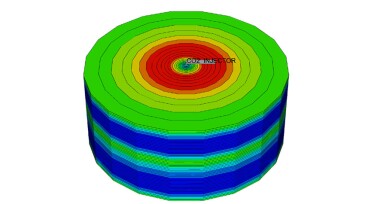
This paper describes a full-field and near-wellbore poromechanics coupling scheme used to model productivity-index degradation against time.
-
This paper develops a deep-learning work flow that can predict the changes in carbon dioxide mineralization over time and space in saline aquifers, offering a more-efficient approach compared with traditional physics-based simulations.
-
This paper explains how an operator’s projects in the Vaca Muerta have become more-efficient and cost-effective by increasing production and reducing well-delivery-cycle time while fostering the long-term sustainability of the project.