Reservoir
This study demonstrates how routinely acquired downhole temperature data allows for direct estimation of fluid saturations and delivers more accurate reservoir volume assessments, particularly in aquifer-supported systems.

Sponsored
Effective data analysis depends on seeing connections that matter. Explore how Spotfire enables a more intuitive approach to understanding petroleum data.

The deal adds over 1,000 potential drilling locations and almost doubles oil production for Houston-based Magnolia.
-
 The paper highlights two case studies to illustrate successful development of marginal prospects to unlock remaining potential.
 -
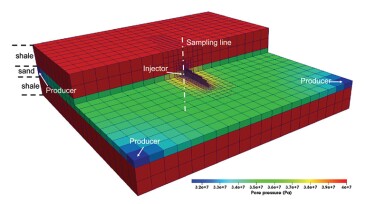
This paper introduces methods to fully couple reservoir simulation with wellbore flow models in fractured injection wells.
-
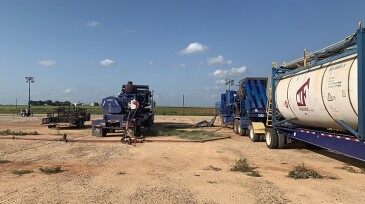
A rigless chemical frac-hit remediation process was designed to address the damage mechanisms of capillary phase trapping, reduced hydrocarbon relative permeability, paraffin deposition, and minor scale deposition.
-
The disruptive nature of unconventional reservoirs has spurred the need for new ideas. But that doesn’t always mean that we need to toss out the traditional methods that got us here. Such might be the case for the recent developments unfolding around the diagnostic fracture injection test (DFIT).
-
This paper provides an alternative solution to identifying, classifying, and vertically distributing fractures and a lateral distribution method for reservoir modeling.
-
The paper demonstrates the ability of deep-learning generative models to enable new shale-characterization methods.
-
A new dose of constraint may just be the best prescription for those making reserves estimates on prospective unconventional resources.
-
The complete paper describes a tool developed to evaluate and characterize thin beds or laminations in a mature offshore field.
-
The paper presents a model for shale gas production in which CO2 is injected by huff ’n’ puff into a hydraulic fracture surrounded by a shale matrix.
-
Statistics are important in knowing where the sharp minds of SPE members are investing their energies. Typically, this is also in proportion to what those members need. Hence, it is noteworthy that more than a fifth of the papers were about CO2-based EOR, indicating not only renewed interest but also the motivation for carbon capture, use, and storage.