Reservoir

This paper documents the testing, integration, and field deployment of a metal expandable packer used as an openhole toe isolation plug in a deepwater well under high-pressure, high-temperature conditions.

Three papers are highlighted as the primary contributions because of their broad industry relevance. They focus on improving formation particle-size characterization, expanding the application of openhole gravel packs in depleted and compartmentalized reservoirs, and advancing the understanding of capillary pressure in sand production.

This paper aims to establish a set of best practices for generating particle-size-distribution data from core samples.
-
 This paper provides a robust methodology for miscible CO2 WAG experimental-data acquisition and history matching.
 -
This paper describes a case study of the Chonskaya group of fields to demonstrate an approach to the integration of time-domain-electromagnetic (TDEM) electrical and seismic data when building a geological model for improving reservoir-property and -saturation prediction.
-
To the best of the authors’ knowledge, this is the first surface-complexation-based model that describes fully ionic compositional dependence observed in ionically treated waterfloods in both sandstones and carbonates.
-
This paper presents an interdisciplinary approach to the description of tectonic dislocations made on the basis of interpretation of seismic data, petrophysical analysis of well-logging data in horizontal wells, and inversion of a multifrequency propagation tool.
-
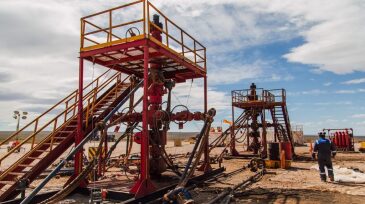
Vaca Muerta production is on the upswing. Will increasing activity propel the Argentine play to the ranks of US shale? Data suggest it is both already there and has a ways to go.
-
Production and proved reserves in the Permian Basin’s Wolfcamp Shale and Bone Spring Formation are reaching new heights, and a new assessment from the US Geological Survey indicates the industry is just scratching the subsurface when it comes to what may be technically recoverable.
-
In the clustered-development approach, the geologic dependence between prospects is combined with the aggregation of prospects to determine the economic viability of a grassroots development offshore.
-
This paper presents the implementation of an approach for improving oil recovery by water-injection optimization using injection-control devices (ICDs) in unconventional reservoirs.
-
Proved oil and gas reserves in the US have spiked to levels not seen before, the EIA reports, and one of the main drivers is the Permian’s Wolfcamp-Bone Spring Shale.
-
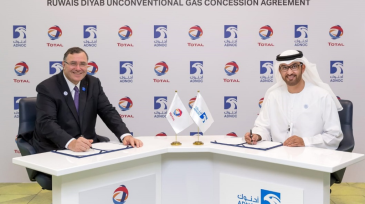
The French major will become operator of the Ruwais Diyab concession, and ADNOC says additional companies are lining up to partner on the emirate’s other unconventional areas.