Reservoir

Three papers are highlighted as the primary contributions because of their broad industry relevance. They focus on improving formation particle-size characterization, expanding the application of openhole gravel packs in depleted and compartmentalized reservoirs, and advancing the understanding of capillary pressure in sand production.

This paper aims to establish a set of best practices for generating particle-size-distribution data from core samples.

This paper discusses the successful execution of two openhole gravel-pack completions in two Gulf of Mexico fields with depleted reservoirs.
-
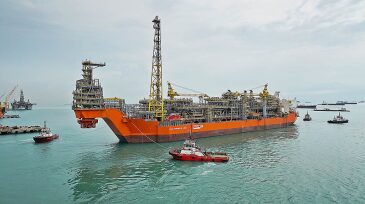
 Low oil prices have made the goal of this Petrobras project and its four partners to lower the break-even price of operating to USD 35/bbl.
 -
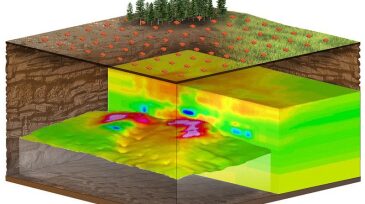
Electromagnetic (EM) reservoir imaging is likely to get more attention from operators thanks to a collaboration between Halliburton and a leader in this emerging technology, GroundMetrics.
-
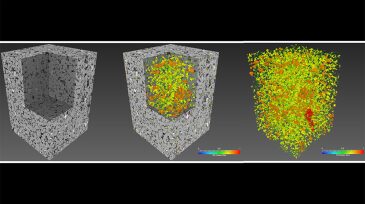
Need a Faster Measure of Relative Permeability? Take a CT Scan and Follow With Digital Rock AnalysisFaster, lower-cost measures of multiphase permeability of conventional reservoirs are promised by a digital rock analysis method developed by BP and Exa, which is marketing software to measure relative permeability.
-
This paper describes both design and economic considerations that lead to the selection of vacuum-insulated tubing (VIT) or vacuum-insulated casing (VIC) for the completion of thermal wells.
-
This study aims to investigate the efficacy and feasibility of cryogenic-fracturing technology in enhancing the permeability of unconventional-reservoir-rock analogs.
-
This paper presents an overview of the SACROC Unit’s activity focusing on different carbon dioxide (CO2) injection and water-alternating-gas (WAG) projects that have made the SACROC unit one of the most successful CO2 injection projects in the world.
-
This paper presents key challenges in surface-facilities-project implementation during the construction and operational-readiness phase of a project and presents results from full-field implementation.
-
This paper provides an overview of all enhanced-oil-recovery (EOR) projects in the Greater Prudhoe Bay (GPB) region and presents the process and methodology for MI allocation to these projects and to individual injection patterns.
-
Significant progress in cost reduction has been made in the industry following the price downturn, not only in the direct cost of construction and operations but also through a determined drive to simplify and streamline new projects in concepts selected for facilities and wells.
-
There is increasing interest in drilling the Austin Chalk formation, with hopes that the latest unconventional development methods can deliver a boom in a play that has seen several over a 90-year history.