Reservoir

Three papers are highlighted as the primary contributions because of their broad industry relevance. They focus on improving formation particle-size characterization, expanding the application of openhole gravel packs in depleted and compartmentalized reservoirs, and advancing the understanding of capillary pressure in sand production.

This paper aims to establish a set of best practices for generating particle-size-distribution data from core samples.

This paper discusses the successful execution of two openhole gravel-pack completions in two Gulf of Mexico fields with depleted reservoirs.
-
 The authors of this paper describe reservoir-fluid-geodynamics processes that explain the reasons behind varying oil compositions and properties within and across different reservoir compartments.
 -
Interfacial tension keeps oil and water separate by resisting the mixing of their molecules at the surface. Learn how industry experts measure this force to diagnose fluid behavior.
-
The SPE Reservoir Advisory Committee has updated its "state of the reservoir technical discipline" document. The new edition is available for free download.
-
The operator’s deepwater discovery in the Gulf of Mexico is potentially commercial, and government analysis indicates the gulf holds 1.3 billion BOE more reserves than estimated.
-
The test marks a milestone in the Poseidon CCS project, which aims to store carbon dioxide in the depleted gas reservoir below the Leman development in the southern North Sea.
-
The company credited its theory of shale oil enrichment for the significant increase in the quantity of proven reserves at the field.
-
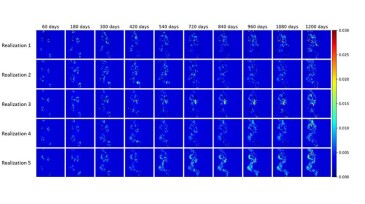
In this study, a deep-neural-network-based workflow with enhanced efficiency and scalability is developed for solving complex history-matching problems.
-
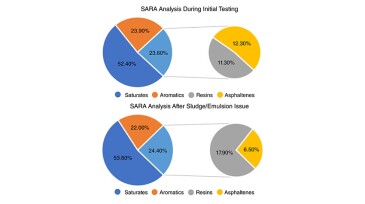
This work investigates the root cause of strong oil/water emulsion and if sludge formation is occurring within the reservoir using a robust integrated approach.
-
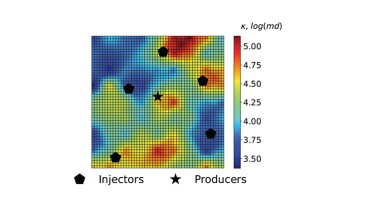
This study presents a production-optimization method that uses a deep-learning-based proxy model for the prediction of state variables and well outputs to solve nonlinearly constrained optimization with geological uncertainty.
-
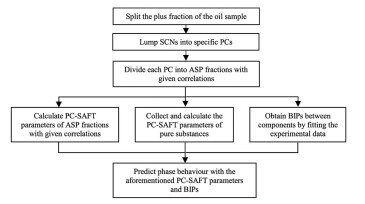
In this work, a perturbed-chain statistical associating fluid theory equation of state has been developed to characterize heavy-oil-associated systems containing polar components and nonpolar components with respect to phase behavior and physical properties.