Reservoir

This paper aims to establish a set of best practices for generating particle-size-distribution data from core samples.

This paper discusses the successful execution of two openhole gravel-pack completions in two Gulf of Mexico fields with depleted reservoirs.

By integrating experimental and mathematical modeling approaches, this work aims to advance the understanding of sand-detachment dynamics and formation instability under varying saturation conditions.
-
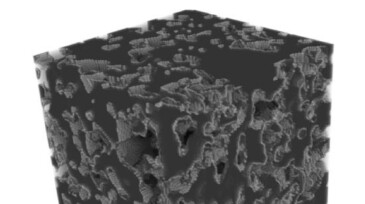
 This paper presents a novel modeling framework for predicting residual oil saturation in carbonate rocks. The proposed framework uses supervised machine learning models trained on data generated by pore-scale simulations and aims to supplement conventional coreflooding tests or serve as a tool for rapid residual oil saturation evaluation of a reservoir.
 -
Join us on 17 September for the virtual launch event of the new SPE Integrated Reservoir Management Technical Section.
-
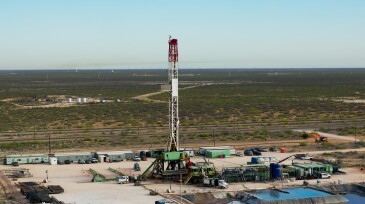
One hydraulic fracturing job can stimulate two wells, but economic success hinges on doing it in the right place for the right price.
-
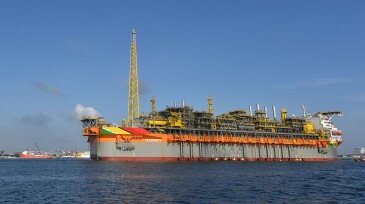
Since the late 1930s, the offshore industry has advanced from the first platform in 14 ft of water to the ultradeepwater 20K era. Driven by seismic, drilling, and development breakthroughs, the industry has pushed into deeper waters, high-pressure reservoirs, and new frontiers like Guyana, continually expanding the limits of offshore exploration.
-
This paper presents a multidisciplinary view of the evolution of a development project for the central area of Sururu and the method applied to address challenges and propose solutions.
-
Surveillance technologies have undergone a revolution, reshaping how facilities, wells, and reservoirs are monitored. These advancements not only have increased the scale at which these technologies are deployed but also have led to an unprecedented influx of data. The sheer volume of data, however, poses a significant challenge to traditional analytical methods.
-
This paper assesses the potential of augmented depletion development in four US plays: Bakken, Eagle Ford, Midland, and the Anadarko Basin.
-
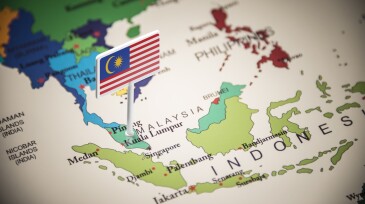
Carbon storage specialist Storegga joins Petronas and ADNOC in a joint study to strategize the build-out of Malaysia’s offshore as a regional CCS hub.
-
This paper presents a clear and consistent method for determining dead and live crude EACNs using a single reliable method, highlighting a graphical way to determine the optimal salinity and its uncertainties using real data.
-
Rig counts are down since 2023, but well productivity is marching forward.