Reservoir

This paper aims to establish a set of best practices for generating particle-size-distribution data from core samples.

This paper discusses the successful execution of two openhole gravel-pack completions in two Gulf of Mexico fields with depleted reservoirs.

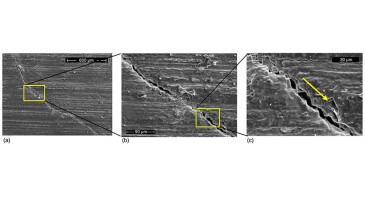
By integrating experimental and mathematical modeling approaches, this work aims to advance the understanding of sand-detachment dynamics and formation instability under varying saturation conditions.
-
 This work presents an integrated multiphase flow model for downhole pressure predictions that produces relatively more-accurate downhole pressure predictions under wide flowing conditions while maintaining a simple form.
 -
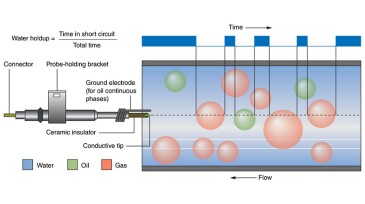
This study describes a technique combining borehole acoustic reflection imaging with production logging in a horizontal well experiencing high water cut with the aim of enabling a mitigation plan.
-
The aim of this study is to address and discuss the reservoir engineering aspects of geological hydrogen storage.
-
This paper details how the reservoir modeling workflow can be accelerated, and uncertainty reduced, even for challenging greenfield prospects by constructing multiple small fit-for-purpose integrated adaptive models.
-
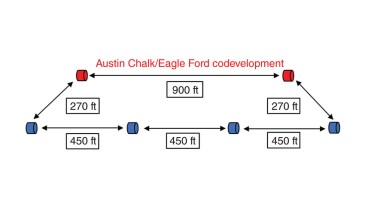
The authors investigate the utility of applying unconventional technology to low- or variably producing carbonate reservoirs to increase estimated ultimate recovery and decrease development-scale variability.
-
The integration of artificial intelligence/machine learning with traditional workflows marks a turning point, unleashing the immense potential of these proven techniques to address our everyday challenges in reservoir simulation.
-
The honor recognizes recipients for their lasting and significant contributions in the field of IOR.
-
Unconventional reservoirs bear a unique perplexity in that, at every scale, they are different from their conventional counterparts and even one another. This month’s selection of papers is all about those differences.
-
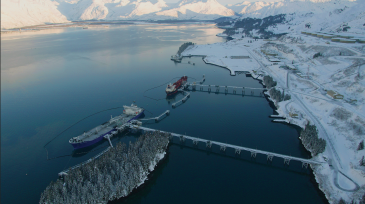
By acquiring Eni’s two producing shallow-water assets, Hilcorp will become the largest offshore oil producer on Alaska’s North Slope.
-
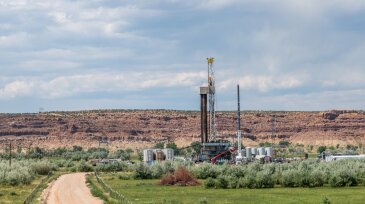
The acquisition underscores the rapid rise of the unconventional oil play in northeastern Utah that producers claim offers better margins than the Permian Basin.