Risk management

With funding opportunities improving, developers and researchers are focused on shortening project learning cycles and reducing uncertainty to attract more capital and speed deployment.

The latest edition of ISO 20815 extends the petroleum industry's production assurance and reliability management framework to carbon capture, hydrogen, ammonia, and wind assets.

Panelists at the SPE Subsea Well Intervention Symposium discussed where AI is delivering value today, where risks remain, and how engineers can best determine its usefulness.
-
 Digital transformation presents a crucial opportunity to cut costs across business domains. This review explores unique digital transformation opportunities in the petroleum industry, highlighting valuable business process automations that can drive significant benefits.
 -
A seismic prediction model is developed and presented in a case study to simulate the magnitude and timing of triggered seismic events with the intent to manage and mitigate environmental impacts resulting from induced seismicity during subsurface development activities.
-
Kampala is drawing now on international experience to sidestep the “oil curse” before first crude flows from its Lake Albert developments.
-
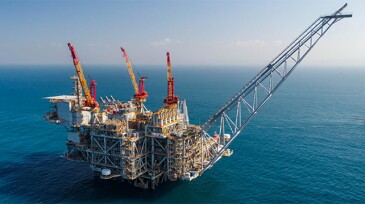
Consortium suspends planned purchase of 50% stake in Israeli gas producer in light of ongoing military conflict in the region.
-
The advancement of the oil and gas industry hinges on its ability to transform digitally by applying high-quality data to illuminate its path forward.
-
SponsoredImprove modeling accuracy and reduce the risk of unplanned downtime. By eliminating the need for multiple applications, complete more accurate comprehensive pressure safety studies faster.
-
An Energy Industries Council survey of nearly 100 energy supply chain leaders finds that a lack of "consistent and profitable work in green projects" prompts a return to oil and gas projects.
-
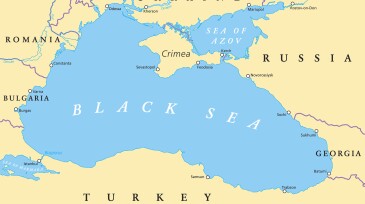
The Black Sea is where Turkey shares maritime borders not only with Russia and Ukraine, but also with EU nations such as Romania. Its significance is evolving, both regionally and globally.
-
Driving change to encourage a new way of thinking about enterprise-level risk and potential hazards.
-
With global decommissioning activities forecast to reach $100 billion through 2030, early planning for it could go far in helping to minimize risk and associated costs.