Risk management

This article from Murphy Oil outlines a modernization effort that resulted in increased scenario simulation capacity by five to 10 times.

Sponsored
This case study by CNOOC and Halliburton highlights how enhanced multizone sand control treats eight unequal zones in one trip and reduces completion time by 60 hours in Bohai Bay, China.

The transition away from materials that contain per- and polyfluoroalkyl substances (PFAS), co-called forever chemicals, creates an opportunity to preserve historical information. Information that appears to have little operational value today may later become important when organizations need to evaluate past PFAS use. Once that information is lost, recreating it may…
-
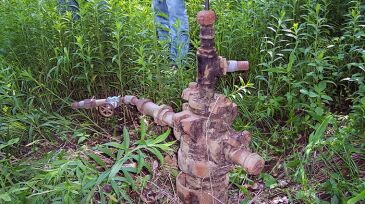
 The Ohio River Valley Institute finds operator indifference, regulatory noncompliance as chief factors in state's growing number of deserted wells.
-
Buoy-based camera footage, analyzed by artificial intelligence, can help reduce the risk of birds colliding with offshore wind farm turbines.
-
EVP Giulia Chierchia and Chairman Helge Lund are stepping down amidst difficult Q1.
-
The EIA issued a new forecast for US oil production as a result of US President Donald Trump’s recently announced tariffs.
-
A 25% tariff on steel imported into the US has some US oil and gas companies nervous about future spending plans.
-
This paper introduces a novel optimization framework to address CO2 injection strategies under geomechanical risks using a Fourier neural operator-based deep-learning model.
-
Experts speaking at CERAWeek 2025 lauded industry's shift from focusing on the energy transition to prioritizing oil production.
-
Global offshore decommissioning projects hear the starting gun in Australia and the North Sea, but will the race be a marathon or a sprint?
-
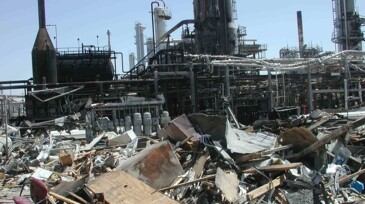
This paper discusses and demonstrates the limitations of quantitative risk assessments (QRA) with respect to the usefulness of the concept in managing day-to-day and emerging risks as well as the effect of change. The paper goes on to discuss improved solution sets compared with pure reliance on QRA.
-
“Riskwashing” refers to a situation where an organization engages in superficial or insincere actions to create the appearance of addressing a particular risk or issue without actually taking substantive action to address the underlying problem. This paper presents methods to identify and minimize riskwashing as an organizational response to incidents.