Safety

The SPE Human Factors Technical Section has been officially renamed the SPE Safety Technical Section. The new name better reflects how safety is managed today across interconnected areas like human performance, risk management, and system resilience.

The company said its frequency of serious incidents was down at the end of the year from its levels at the end of 2024.

This paper examines how real-time monitoring can improve both incident prevention and emergency response in the oil and gas industry. Drawing from real-world examples and case studies, it provides practical strategies for implementing this technology effectively.
-
 Behavior is neutral. This simple mantra will set your safety program free of the dysfunctions that kill your safety culture. Behavior is not right or wrong, good or bad. It just is. Approach behaviors with the dispassionate, objective view of a scientist.
 -
Despite the challenges of working in the offshore environment, Sulzer Wood has recently recorded 9 years without a lost-time incident, which equates to approximately 1.5 million man-hours.
-
The Bureau of Safety and Environmental Enforcement says its final well-control rule removes unnecessary regulatory burdens to responsible offshore development while maintaining safety and environmental protection.
-
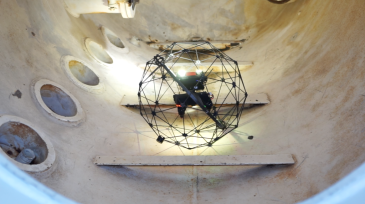
Advances in robotics can revolutionize the way maintenance, inspection, and testing is performed, making operations safer by reducing exposure of personnel to hazards. This paper analyzes the causes of slow industry adoption of robotic technologies and presents a roadmap for accelerated adoption.
-
This paper explains how an ultradeepwater drilling contractor is applying real-time analytics and machine learning to leverage its real-time operations center to improve process safety and performance.
-
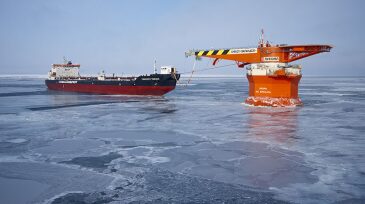
Wärtsilä’s integrated infrastructure combines the bridge systems, cloud data management, data services, decision support tools, and access to real-time information for the fleet of tankers managed by Sovcomflot, Russia’s largest shipping company.
-
The Bureau of Safety and Environmental Enforcement says its staffing and inspections are up, while the environmental group Oceana says that oil and gas drillers have a financial incentive to ignore safety.
-
Even as the Trump administration has taken steps to expand offshore oil drilling, a new report shows that thousands of oil spills are still happening and that workers in the oil and gas industry are still dying on the job.
-
Behavior-based safety is not a new concept nor is it new at Murphy Oil. But when Murphy launched its Safety Observation Program as a digital tool, it revitalized the way the culture of safety spread throughout the company.
-
Safety depends on developing a dedicated culture mind-set and mitigation of risks, from the planning and engineering phases to the work site. These papers selected by OGF technical paper editor Gerald Verbeek present various practices for reducing and eliminating the number of incidents.