Safety

The SPE Human Factors Technical Section has been officially renamed the SPE Safety Technical Section. The new name better reflects how safety is managed today across interconnected areas like human performance, risk management, and system resilience.

The company said its frequency of serious incidents was down at the end of the year from its levels at the end of 2024.
This paper examines how real-time monitoring can improve both incident prevention and emergency response in the oil and gas industry. Drawing from real-world examples and case studies, it provides practical strategies for implementing this technology effectively.
-
 For employees to report on safety incidents, there must be a ‘just culture,’ where issues can be discussed freely and underlying causes investigated and corrected without fear of punitive actions.
 -
Companies in the petroleum industry, from exploration and production, to transportation, refining, and distribution, operate around the clock. This paper intends to raise awareness on the impact of fatigue in the petroleum industry and recommend a framework for fatigue risk management.
-
The emotional involvement of participants during the initial phase of a safety campaign increases implementation effectiveness significantly. In this case, a film guides the audience to make positive, personal choices whenever planning and operating a work at height.
-
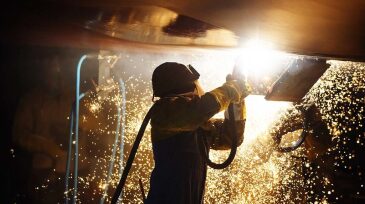
This paper describes an operator’s experience with HFE during the construction and fabrication/installation phase of projects, including welding during the fabrication of buoyancy tanks, emergency preparedness, and the use of 3D model walk-throughs.
-
An examination of studies on air pollutants associated with oil and gas extraction finds that measurements near operational sites have generally failed to mark levels above standard health benchmarks; yet, many studies find poor health outcomes increasing as distance from these operations decreases.
-
In both developed and developing countries, noise is regarded as the most common occupational hazard in various industries. The present study aimed to examine the effect of sound pressure level on serum cortisol concentration in three different times during the night shift.
-
Oil and gas firms may be exposed to significant unseen long-term costs in their procurement of health and safety equipment.
-
Cutting-edge computing and subsea wireless camera technology deployed on a pipeline construction project enhanced diver safety and generated significant cost savings by avoiding the need for additional subsea vessels.
-
New methodology addresses underlying issues to achieve more-sustainable process-safety and HSE performance.
-
The people in the offshore oil and gas industry have an expectation that they can work each day with zero harm to their safety or the environment. The Ocean Energy Safety Institute and the Research Partnership to Secure Energy for America have teamed up to create a roadmap to reach this goal.