Safety

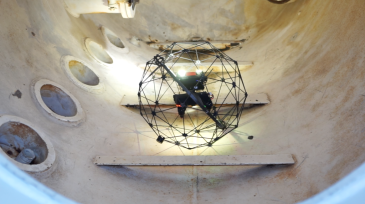
Shell has demonstrated drone-in-a-box operations from its Mars floating production unit, becoming the first operator in the region to secure FAA approval for self-approved offshore beyond-visual-line-of-sight flights. JPT Senior Technology Editor Jennifer Pallanich visited Shell Technology Center Houston to see the system in action.

SPE’s newly renamed Safety Technical Section expands the reach of human factors by integrating safety, risk management, and system resilience expertise while preserving dedicated leadership and technical focus.

As drilling operations become increasingly digital, computer vision is emerging as a continuous safety layer that complements, not replaces, established safety practices. The challenge is no longer whether artificial intelligence can detect hazards, but how operators should deploy, integrate, and govern these systems to improve safety without adding operational comple…
-
 Advances in robotics can revolutionize the way maintenance, inspection, and testing is performed, making operations safer by reducing exposure of personnel to hazards. This paper analyzes the causes of slow industry adoption of robotic technologies and presents a roadmap for accelerated adoption.
 -
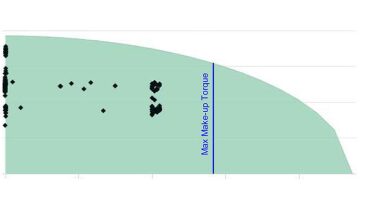
This paper explains how an ultradeepwater drilling contractor is applying real-time analytics and machine learning to leverage its real-time operations center to improve process safety and performance.
-
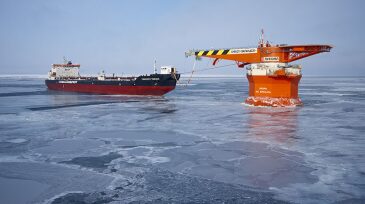
Wärtsilä’s integrated infrastructure combines the bridge systems, cloud data management, data services, decision support tools, and access to real-time information for the fleet of tankers managed by Sovcomflot, Russia’s largest shipping company.
-
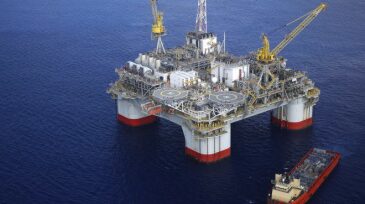
The Bureau of Safety and Environmental Enforcement says its staffing and inspections are up, while the environmental group Oceana says that oil and gas drillers have a financial incentive to ignore safety.
-
Even as the Trump administration has taken steps to expand offshore oil drilling, a new report shows that thousands of oil spills are still happening and that workers in the oil and gas industry are still dying on the job.
-
Behavior-based safety is not a new concept nor is it new at Murphy Oil. But when Murphy launched its Safety Observation Program as a digital tool, it revitalized the way the culture of safety spread throughout the company.
-
Safety depends on developing a dedicated culture mind-set and mitigation of risks, from the planning and engineering phases to the work site. These papers selected by OGF technical paper editor Gerald Verbeek present various practices for reducing and eliminating the number of incidents.
-
For employees to report on safety incidents, there must be a ‘just culture,’ where issues can be discussed freely and underlying causes investigated and corrected without fear of punitive actions.
-
Companies in the petroleum industry, from exploration and production, to transportation, refining, and distribution, operate around the clock. This paper intends to raise awareness on the impact of fatigue in the petroleum industry and recommend a framework for fatigue risk management.
-
The emotional involvement of participants during the initial phase of a safety campaign increases implementation effectiveness significantly. In this case, a film guides the audience to make positive, personal choices whenever planning and operating a work at height.