Offshore/subsea systems

This paper describes the successful deployment of flexible coiled tubing technology in an oil-producing well of the offshore Frade field in Brazil’s Campos Basin.

This paper describes the use of encapsulated polymer technology to address the issues of shear degradation and injectivity integrity faced in the application of polymer flooding in an offshore development context.

New technical papers suggest advanced robotic systems may not be far away from broad adoption for a large share of offshore inspection and intervention.
-
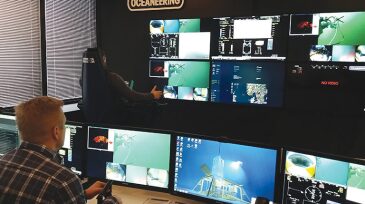
 Operators for remotely operated vehicles will be getting more remote in the future as land-based control begins to become a reality.
 -
Anyone selling something new for offshore exploration and production has to be able to answer a simple question from customers, “How can we save some money?” For Norwegian oil companies, change is coming in many forms: steel, sensors, software, and standards.
-
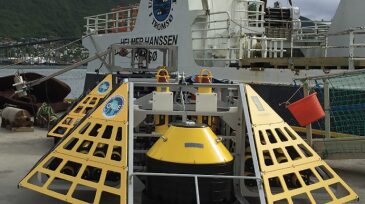
The need to economically invest in offshore exploration and production has inspired a wide range of innovations in Norway to drastically reduce costs, which can lead to changes in offshore operations around the world.
-
A new method for accessing and cementing hard-to-reach spaces around complex offshore wells.
-
The BC-10 asset, located in deep water offshore Brazil, produces heavy oil in the range of 16 to 24 °API. In this article, two examples of production optimization for this field will be provided (further examples are available in the complete paper).
-
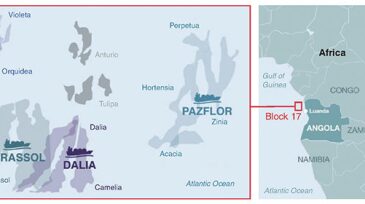
This paper describes the CLOV deepwater megaproject in Block 17 offshore Angola, which cost USD 8.4 billion to first oil.
-
Moving to higher-capacity wellhead systems for high-pressure and high-temperature (HP/HT) environments will require a larger mandrel and conductor-casing size.
-
To help lower costs of offshore projects, DNV GL has launched initiatives focused on the use of composite components.
-
A RPSEA project identified the gaps in technology that are the most pressing for multiphase-flow measurement.
-
Deepwater production has become more reliant on the integrity of subsea, umbilical, riser, and flowline (SURF) systems. A JIP explored cost-effective inspection and maintenance options.