Sustainability

The startup company’s Midland Basin demonstration plant, located in the Permian Basin, takes a major step toward commercialization by proving its direct lithium extraction technology can refine battery-grade lithium carbonate from produced water under multiple 24/7 production cycles.

This paper explores the application of a modular, high-temperature gas-cooled nuclear reactor to a Very Large Crude Carrier-class floating production, storage, and offloading vessel.

This paper describes the potential of combined-cycle technology (use of a gas turbine and a steam turbine together to turn fuel into electricity) in offshore carbon-capture applications.
-
 The supermajor’s Energy Outlook 2025 suggests geopolitical fragmentation could tilt the balance of the energy trilemma toward energy security and away from sustainability.
 -
Iraq’s Gas Growth Integrated Project aims to increase electricity generation by capturing flare gas collected from three southern oil fields. A desalination project will use treated seawater to maintain well pressures.
-
The project is expected to recover up to 300 MMscf/D of flared gas. Plans call for the recovered gas to be converted into treated dry gas, liquefied petroleum gas, and condensate for domestic use and export.
-
The International Energy Agency cited a wave of cancellations and persistent challenges for dropping its projection for annual production of low-emissions hydrogen by 2030 from 49 mtpa to 37 mtpa.
-
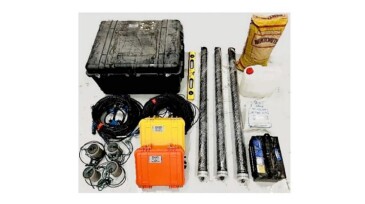
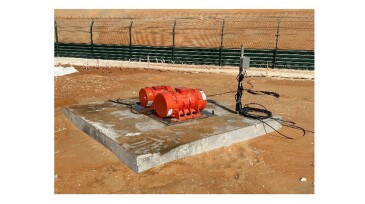
This study assesses the advantages, constraints, and necessary enhancements of both passive and active electromagnetic techniques in the context of carbon capture and storage.
-
The paper describes the deployment of fiber-optic monitoring of CO₂ injection and containment in a carbonate saline aquifer onshore Abu Dhabi.
-
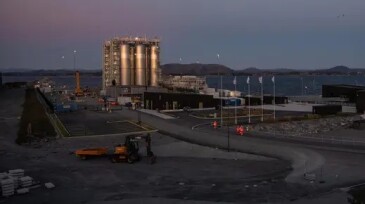
The collaboration will see TGS’ software platform implemented throughout the carbon value chain at the Northern Lights project.
-
With Brazil enacting South America’s first carbon capture and storage (CCS) law, this article examines the technical and regulatory architecture required to scale CCS deployment and provides exclusive insight into Brazil’s accelerating CCS landscape.
-
This paper describes a risk-based self-verification process conducted through a bespoke software application.
-
This paper discusses and demonstrates the limitations of quantitative risk assessment (QRA) with respect to the usefulness of the concept in managing day-to-day and emerging risks as well as the effect of change.