Sustainability

Opening day remarks from President Mohamed Irfaan Ali framed fossil fuels and renewables as parallel systems amid rising demand and structural supply pressures.

Experts and industry leaders gathered in The Woodlands, Texas, recently to sift through the challenges of carbon capture, utilization, and storage. The puzzle is coming together, but some critical pieces are still needed before the results look like the picture on the box.

The chair of the SPE Georgetown Section outlines how balanced, apolitical dialogue can support development amid rapid energy expansion.
-
 This paper discusses and demonstrates the limitations of quantitative risk assessment (QRA) with respect to the usefulness of the concept in managing day-to-day and emerging risks as well as the effect of change.
 -
A new paper from researchers at Heriot-Watt University outlines key advances in chemistry that are driving the push in carbon capture technology.
-
The companies have signed an agreement to deliver carbon captured using Shell’s Cansolv system.
-
The North Sea project will transport and permanently store up to an initial 4 million metric tons of carbon dioxide per year, with startup expected in 2028.
-
The update increases the guidance’s focus on creating a just energy transition.
-
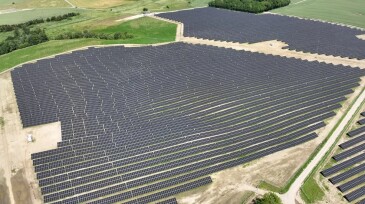
The facility has more than 100,000 solar panels and is capable of producing 65 MW.
-
This paper aims to describe the role of liquefied natural gas as a transitional energy source for automobile transportation in Nigeria.
-
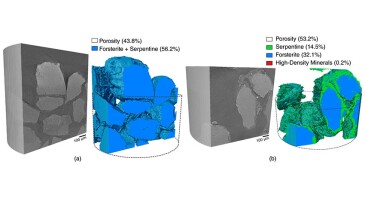
This study concludes that it is relatively easy to generate enhanced hydrogen in the laboratory during injection of high-pH aqueous solution through a pack of olivine sand.
-
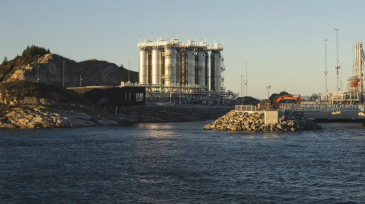
The contractor will deliver a similar carbon dioxide injection system to the one it completed for phase one in 2023.
-
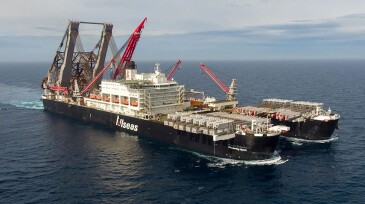
The Dutch marine contractor says it plans to outfit its construction vessels with small modular reactors over 5 years.