Unconventional/complex reservoirs

Transaction adds 90,000 net acres and 68,000 BOE/D of production as Crescent expands its South Texas footprint.

This paper documents the testing, integration, and field deployment of a metal expandable packer used as an openhole toe isolation plug in a deepwater well under high-pressure, high-temperature conditions.

This paper aims to establish a set of best practices for generating particle-size-distribution data from core samples.
-
 Three graduate students have received the 2025 SPE Hydraulic Fracturing Technology Conference and Exhibition Outstanding Graduate Student Award.
 -
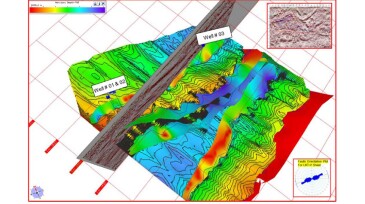
The main goal of this research work was to determine subseismic faults and fracture corridors and their characteristics, including density and orientation, for a Paleocene fractured carbonate reservoir.
-
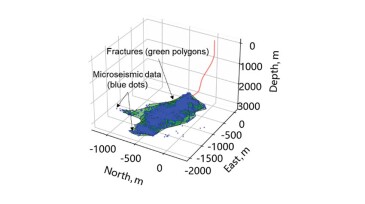
In this paper, an energy-based 3D fracture-reconstruction method is proposed to derive the complex fracture network from microseismic data in a shale gas reservoir.
-
The authors write that, by wireline formation testing of a sandstone formation adjacent to a sand/shale laminated reservoir in the Weizhou shale-oil region of the Beibu Gulf, key reservoir information can be directly obtained.
-
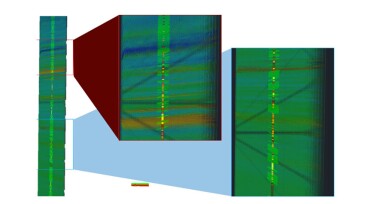
This paper presents a complete digital workflow applied to several greenfields in the Asia Pacific region that leads to successful deep-transient-testing operations initiated from intelligent planning that positively affected field-development decisions.
-
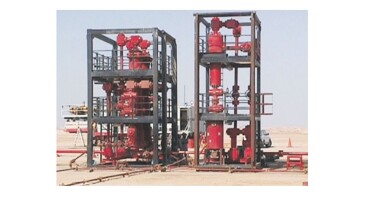
This study introduces a cleanup- and flowback-testing approach incorporating advanced solids-separation technology, a portable solution, equipment automation, improved metallurgy, and enhanced safety standards.
-
A Shell partnership with YPF marks a significant milestone for the Argentina LNG export facility, raising new questions about the nation’s potential to unlock the economic power of its vast shale reserves.
-
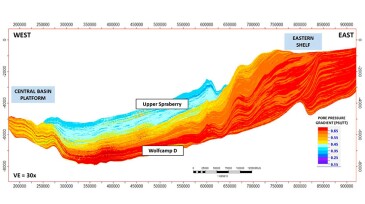
Regional pore-pressure variations in the Leonardian- and Wolfcampian-age producing strata in the Midland and Delaware basins are studied using a variety of subsurface data.
-
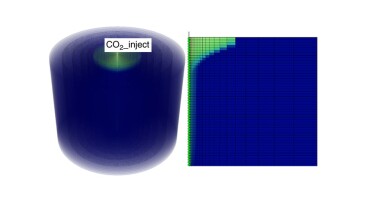
The study uses laboratory and digital core analyses of Berea sandstone to estimate petrophysical and dynamic properties for adjustment of predicted precipitation and flow reduction in reservoir simulation models of intermittent CO₂ injection with aquifer drive.
-
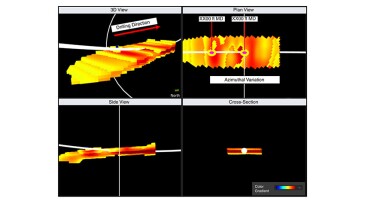
This paper presents a novel workflow for using electromagnetic resistivity-based reservoir mapping logging-while-drilling technologies for successful well placement and multilayer mapping in low-resistivity, low-contrast, thinly laminated clastic reservoirs.