Unconventional/complex reservoirs

Operators struggle to understand proppant placement beyond the fracture, and that’s the information that could be the key to boosting EUR.

High-risk, high-reward projects focused on stimulation, enhanced recovery, and field-scale deployment are eligible under the DOE’s new UNLOCK initiative.

The Norwegian operators will collaborate on technology development, standardization, and well-stimulation solutions aimed at making tight oil and gas resources commercially viable in the NCS.
-
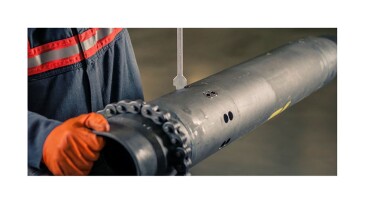
 This paper discusses the development of a multientry, multistage fracturing system and its advantages over traditional openhole multistage fracturing solutions.
-
In the Marcellus, Repsol is slicing and dicing legacy data to evolve its completions strategy, while in the Permian, ExxonMobil is mastering the 4-mile lateral drillout using lessons learned.
-
Field examples of operators using chemical restimulation to boost production in aging unconventional wells as an alternative to acid treatments.
-
The Midland, Texas-based operator said the deal hands it the biggest remaining target in the Midland Basin side of the Permian Basin.
-
Industry leaders champion collaborative solutions as essential for overcoming fracturing limitations.
-
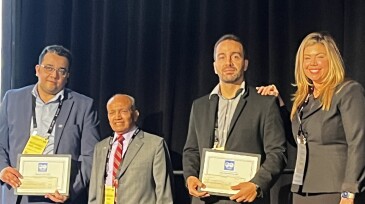
Three graduate students have received the 2025 SPE Hydraulic Fracturing Technology Conference and Exhibition Outstanding Graduate Student Award.
-
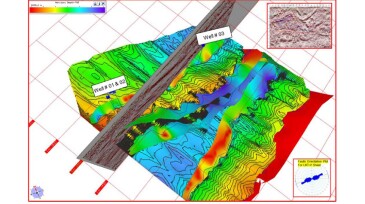
The main goal of this research work was to determine subseismic faults and fracture corridors and their characteristics, including density and orientation, for a Paleocene fractured carbonate reservoir.
-
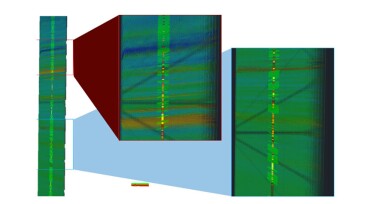
The authors write that, by wireline formation testing of a sandstone formation adjacent to a sand/shale laminated reservoir in the Weizhou shale-oil region of the Beibu Gulf, key reservoir information can be directly obtained.
-
This paper presents a complete digital workflow applied to several greenfields in the Asia Pacific region that leads to successful deep-transient-testing operations initiated from intelligent planning that positively affected field-development decisions.
-
This study introduces a cleanup- and flowback-testing approach incorporating advanced solids-separation technology, a portable solution, equipment automation, improved metallurgy, and enhanced safety standards.