Unconventional/complex reservoirs

The deal adds over 1,000 potential drilling locations and almost doubles oil production for Houston-based Magnolia.

Average output reached 13.6 million BOPD, extending a period of sustained growth that has kept the US at the forefront of global oil production.

The events will be co-located 3–5 May 2027 at Reliant Park in Houston, Texas.
-
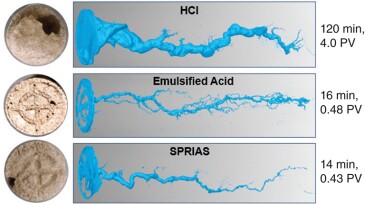
 The authors describe the benefits of a single-phase retarded inorganic acid system, which they write features the same benefits as emulsified acids while eliminating the drawbacks of the latter.
 -
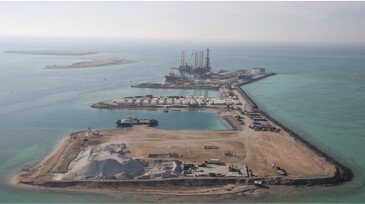
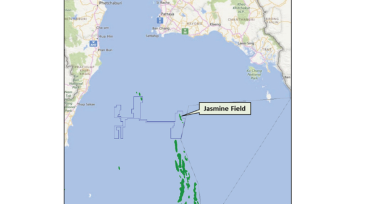
The paper presents the challenges faced and overcome while drilling and testing a high-pressure/high-temperature sour-gas well offshore in an environmentally sensitive environment.
-
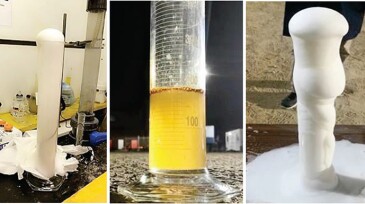
This paper presents a novel sandstone-stimulation technique using thermochemical fluids.
-
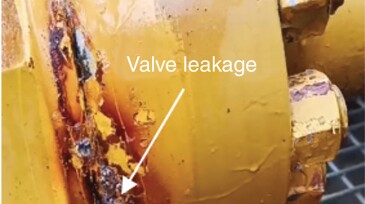
This paper presents a well-integrity-management system developed for a high-pressure/high-temperature gas field in southwest China.
-
Deal expands PDC's D-J Basin holdings into northern Adams County, Colorado.
-
Rodolfo Camacho-Velázquez identifies areas of opportunity for future reservoir engineers related to the technical challenges of increased production and recovery of complex conventional and unconventional reservoirs, the application of Fourth Industrial Revolution technologies in reservoir subdisciplines, and the energy transition.
-
The acquisition adds well completions services for conventional and unconventional reservoirs.
-
The paper highlights two case studies to illustrate successful development of marginal prospects to unlock remaining potential.
-
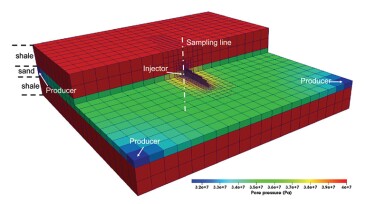
This paper introduces methods to fully couple reservoir simulation with wellbore flow models in fractured injection wells.
-
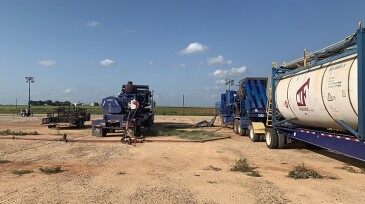
A rigless chemical frac-hit remediation process was designed to address the damage mechanisms of capillary phase trapping, reduced hydrocarbon relative permeability, paraffin deposition, and minor scale deposition.