Unconventional/complex reservoirs

Disposal wells remain the lowest-cost solution for produced water, but concerns over seismicity and long-term sustainability are accelerating interest in alternatives.

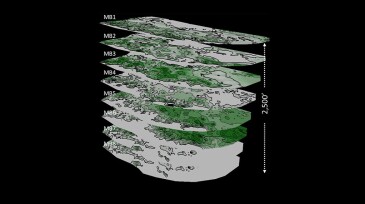
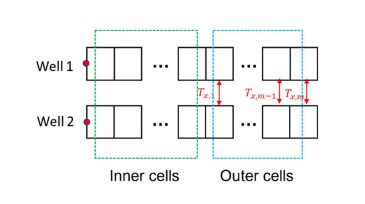
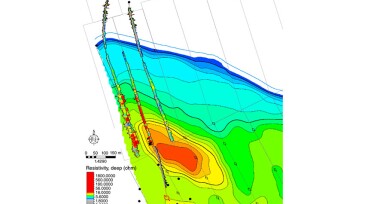
This work applies fuzzy logic, a well-established artificial-intelligence technique, to quantitatively assess connectivity between injectors and producers in a giant presalt field in the Santos Basin of Brazil.

With a strong presence across US shale in the Bakken, Anadarko Basin, Powder River Basin, and the Permian, Continental Resources is expanding into Argentina’s Vaca Muerta shale as the privately held E&P giant pursues international growth.
-
 If optimized to scale, fast fission reactors could play a role in reducing emissions in field operations by producing carbon-free electricity.
 -
Samsung E&A takes home $6 billion of the total amount as EPC contractor.
-
As the biggest US companies grow bigger, the advantage of scale becomes clearer.
-
A 44-well development tests what ConocoPhillips has learned about maximizing the value of the wells by figuring out how they drain the reservoir.
-
The authors of this paper propose a hybrid approach that combines physics with data-driven approaches for efficient and accurate forecasting of the performance of unconventional wells under codevelopment.
-
This paper develops a deep-learning work flow that can predict the changes in carbon dioxide mineralization over time and space in saline aquifers, offering a more-efficient approach compared with traditional physics-based simulations.
-
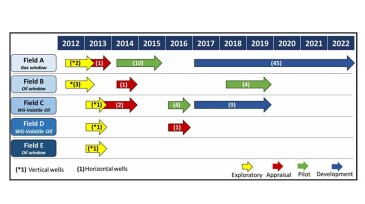
This paper explains how an operator’s projects in the Vaca Muerta have become more-efficient and cost-effective by increasing production and reducing well-delivery-cycle time while fostering the long-term sustainability of the project.
-
This paper describes the potential, challenges, and opportunities of using a modified steam-assisted gravity drainage configuration in the Mukhaizna heavy oil field in suboptimal operating conditions.
-
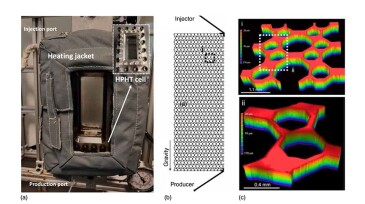
This study aims at understanding the effect of a surfactant known as a high-temperature emulsifying agent as an additive to the steam-assisted gravity drainage process and the possibility of forming oil-in-water emulsions.
-
This paper describes the implementation of a hybrid technology of cyclic steam stimulation and foam into the heavy oil field development plans of the Middle Magdalena Valley basin in Colombia.