Unconventional/complex reservoirs

Transaction adds 90,000 net acres and 68,000 BOE/D of production as Crescent expands its South Texas footprint.

This paper documents the testing, integration, and field deployment of a metal expandable packer used as an openhole toe isolation plug in a deepwater well under high-pressure, high-temperature conditions.

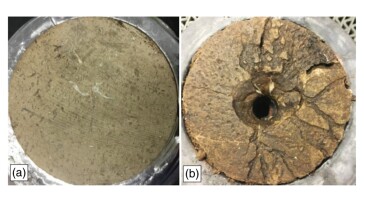
This paper aims to establish a set of best practices for generating particle-size-distribution data from core samples.
-
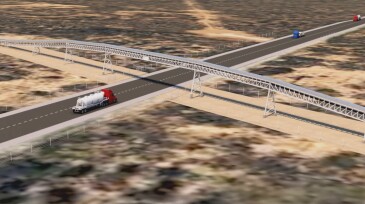
 The first long-haul overland conveyor system to deliver proppant is under construction in the Permian Basin.
 -
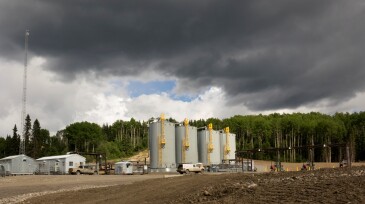
Enverus claims hundreds of millions of barrels of gas condensates are nowhere to be found in public data due to a major reporting gap.
-
A dissolvable collet field tested in an unconventional completion led to an average running time of 32 minutes per stage in a vertical section and 19 minutes per stage in the horizontal section.
-
This paper describes the analysis of actual performance data for acid fracturing in a tight carbonate formation to investigate the ineffectiveness of the process.
-
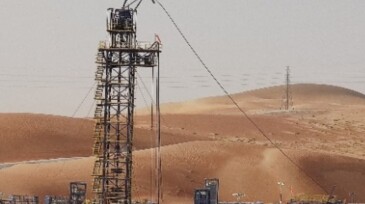
The authors of this paper describe an underbalanced coiled-tubing drilling campaign in the operator’s onshore fields using a closed-loop system design.
-
The authors describe a casing-leak-repair alternative to allow continued hydraulic fracturing of an unconventional formation.
-
Eagle Ford sees ‘surprising resurgence’ as buyers look to secure the play’s mature assets.
-
The independent sells out of south Texas shale, while expanding its Permian presence in separate deals.
-
SponsoredThis Q&A highlights the benefits of AI and ML to automate work flows and analyze data at a much faster rate—within minutes. These capabilities deliver a fit-for-basin approach designed specifically for US-centric work flows.
-
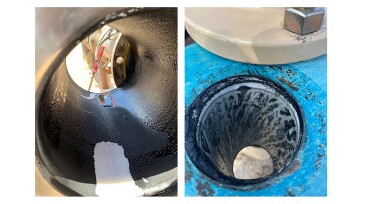
Paraffin deposition on the meters measuring produced water volumes causes inaccurate readings. New technology solutions enable lasting accuracy in the place of routine maintenance that provides a temporary solution.