Water management
This paper presents an approach to the identification, selection, and implementation of initiatives for sustainable water management, withdrawal reduction, and water valorization.

Disposal wells remain the lowest-cost solution for produced water, but concerns over seismicity and long-term sustainability are accelerating interest in alternatives.

This article addresses the challenges of managing water-soluble organics (WSOs) in offshore produced water. It provides a brief discussion of the chemistry, along with strategies and technologies that can be used to manage WSO levels in produced water, thus facilitating compliance with regulatory overboard water-quality guidelines.
-
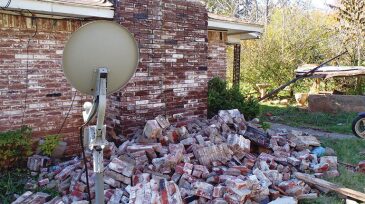
 A sharp rise in seismic events in some areas of the United States where oil and gas production is booming is leading regulators and the industry to examine whether the two are related.
 -
While water issues are often location- and situation-dependent, a standardized guide to water-resource management has been developed for upstream oil- and gas-production projects and operations.
-
This article explores the outlook for the global market and gives insight into technology trends and the regions that hold the biggest opportunities for water treatment.
-
Used extensively by the food, chemical, and pharmaceutical industries, the mechanical-vapor-recompression (MVR) process is viewed as a reliable method for recovering demineralized water from concentrated brines. This paper reports on performance of an advanced MVR system in north-central Texas.
-
Hydraulic fracturing solutions use a gelling agent known as guar gum to transport proppant. Flowback water can have guar gum concentrations has high as 1% by volume creating treatment challenges prior to reuse or disposal.
-
With inconsistent inlet water quality being the rule rather than the exception, sizing and operational considerations of the treatment system components must vary accordingly to make the most economic sense.
-
In this study, a pilot plant with a capacity of 50 m3/d was used to conduct flotation, filtration, and adsorption trials for produced-water treatment at a crude-oil gathering facility.
-
The simplest way to measure return on investment for an offshore water treatment system is to determine whether using the system actually reduces the risk of paying a fine for violating water pollution laws.
-
The demands for the fresh water used in many hydraulic fracturing operations are placing pressure on water sources in some regions of the United States. Because of the high volumes of water needed for fracturing and competing demands availability of fresh water has decreased and costs have grown.
-
This is the fifth article in a series covering water management in hydraulic fracturing in unconventional resources. The focus of this article is biological control. Additives to improve fracturing conditions can have negative effects on water treatment.