

Testing page for app
-
 Since the start of the Ukraine war, Norway has replaced Russia as the top gas supplier to the EU and Britain by maximizing its pipeline capacity and LNG volumes through its interests in export facilities in Norway and the US, as well as regasification in Europe.
 -
Writing a successful SPE International Award nomination is much like building a technical case: clearly define what was accomplished, explain why it mattered, and demonstrate how it stood apart. With nominations for SPE International Awards open through 15 February 2027, this article offers practical guidance for turning a strong career into a compelling award-winning…
-
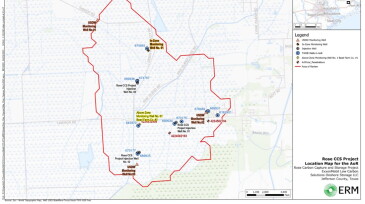
In a 2-1 vote, The Texas Railroad Commission approved the Rose carbon capture and storage project in Southeast Texas, which is planned to store up to 5 million tonnes of carbon dioxide per year.
-
The SPE Board of Directors is developing an updated strategic plan to position the Society for the future of subsurface energy. Before the plan is finalized, members are invited to review the draft vision, mission, and strategic objectives and provide input on the roadmap that will guide SPE’s next phase of growth and impact.
-
The shale revolution, the Paris Agreement, and the global pandemic each transformed energy markets. Now, industry leaders say energy pragmatism is emerging.
-
The French major said it plans to fast-track the development of Acacia-5, expecting to increase production in Angola’s Block 17 by 6,000 B/D.
-
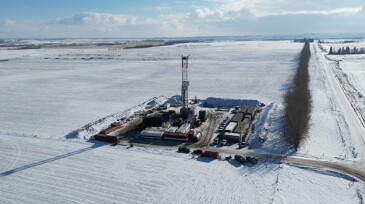
The Origins hub in Alberta, with plans to begin operations in January 2027, is expected to store up to 1.5 mtpa of carbon dioxide initially, with room to grow.
-
More than a dozen companies have joined the advisory board of a new US Department of Energy center dedicated to expanding geothermal energy in the US.
-
The latest edition of ISO 20815 extends the petroleum industry's production assurance and reliability management framework to carbon capture, hydrogen, ammonia, and wind assets.
-
This article from the SPE Integrated Reservoir Management Technical Section (IRMTS) examines the closed-loop IRM approach, from insight to execution to learning, and the limits of technology-driven solutions.







Page 1 of 1,349