Testing page for app
-
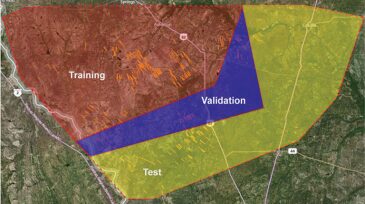
 The authors present a geology-driven deep-learning estimated-ultimate-recovery (EUR)-prediction model for multistage hydraulically fractured horizontal wells in tight gas and oil reservoirs.
-
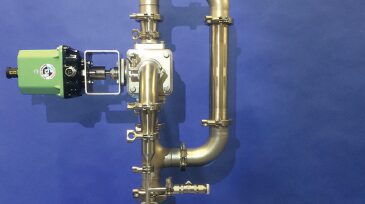
Automated particle-size analyzers are something you will not see on most drilling rigs, but some think this outside-the-oil-field technology will play a big role in the future of the drilling sector.
-
The future of technology in the global energy industry will be driven by cost pressures, the scope of government regulation, and increased digitization
-
With the recent drop in oil prices, operators are shifting to optimization of existing assets with minimal costs. For mature floods (water, chemical, and CO2), one low-cost optimization strategy is the intelligent adjustment of well-rate targets.
-
To survive in the current low-price environment, exploration and production (E&P) companies must better handle the complexities inherent in their projects through practices that promote capital effectiveness and collaboration.
-
Cementing is central to the discussion of zonal isolation and well integrity.
-
This work demonstrates cement design that includes evaluating cement-sheath mechanical integrity in intercalated salts.
-
A great benefit of being the SPE president is the chance to interact with students and young professionals around the world. Many are anxious about the future. I have been asked if this is the worst time ever in the oil business, a question that made me smile.
-
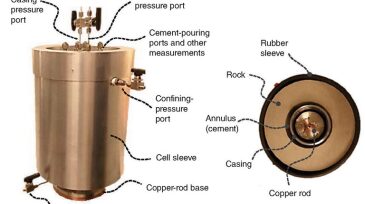
Operators in the North Sea have been concerned about the ability of the cement sheath to maintain sealing integrity because of the increasing number of reported failures in mature wells. This paper presents results from a new laboratory setup to visualize the source of issues.
-
Many wells in the Cana-Woodford shale suffer from chronic sustained casing pressure (SCP) because of poor cement-sheath bonding.