Testing page for app
-
 Most sustainability efforts have been put into alternative or renewable energy research and development and in reducing flaring and venting intensity. While the industry has shown great progress in these areas, there are still many areas that could contribute to sustainability aspirations, one of them being well completions.
 -
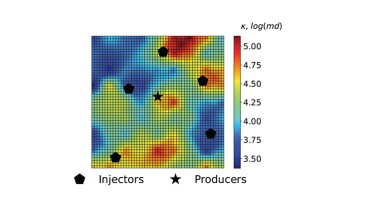
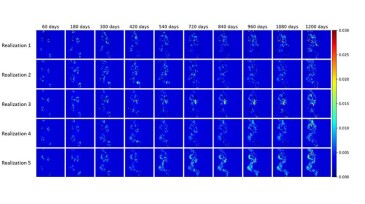
In this study, a deep-neural-network-based workflow with enhanced efficiency and scalability is developed for solving complex history-matching problems.
-
This study presents a production-optimization method that uses a deep-learning-based proxy model for the prediction of state variables and well outputs to solve nonlinearly constrained optimization with geological uncertainty.
-
New case studies highlight how artificial intelligence, advanced hardware, and innovative business models are enabling success in drilling automation.
-
Updates about global exploration and production activities and developments.
-
C. Susan Howes is the nominee for 2027 SPE President. She and four others make up the new slate of nominees recommended for positions open on the SPE International Board of Directors.
-
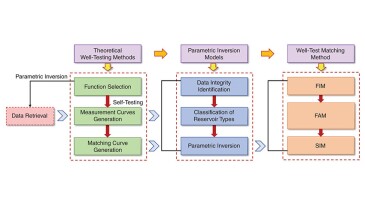
The paper describes a parameter inversion of reservoirs based on featured points, using a semi-iterative well-test-curve-matching approach that addresses problems of imbalanced inversion accuracy and efficiency.
-
In the next 3 to 5 years, South America and the Middle East will lead global investment, driven by greenfield developments, exploration, and midstream infrastructure. Brazil’s growth is fueled by deepwater pre-salt projects, while the Middle East focuses on gas and LNG, especially in Qatar, Saudi Arabia, and the UAE.
-
These three papers leverage machine learning and hybrid methods to tackle challenges in forecasting, optimization, and reservoir characterization.
-
Written on behalf of the SPE Business and Leadership Committee, this article explores the four generations in the upstream energy workforce, highlighting their unique traits and the impact of 40 years of industry changes. It also discusses how DEI, reverse mentoring, and employee resource groups can bridge generational gaps to boost collaboration and productivity in t…