Testing page for app
-
 The $10.5 billion deepwater project is expected to start production in 2028 as the country’s first offshore development.
 -
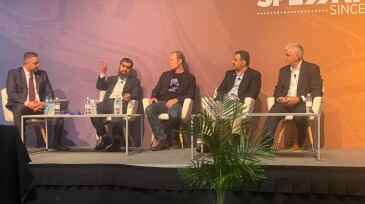
Experts at SPE’s Annual Technical Conference and Exhibition say that despite AI’s great potential, it’s important to be realistic about AI’s capabilities and to remember that successful projects solve specific business problems.
-
This paper delves into the evolving landscape of drilling automation, emphasizing the imperative for these systems to go beyond novelty and deliver quantifiable financial value.
-
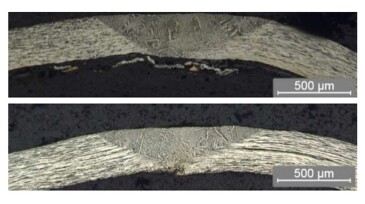
This work presents the results of several failure analyses of gas lift valves retrieved from subsea wells that were unable to prevent backflow from tubing to annulus
-
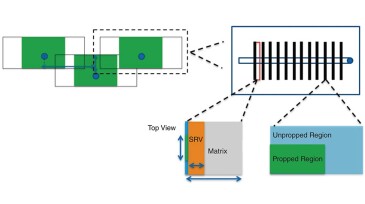
This paper presents a workflow that combines probabilistic modeling and deep-learning models trained on an ensemble of physics models to improve scalability and reliability for shale and tight-reservoir forecasting.
-
This paper describes laboratory tests simulating varying sour-well and extended galvanic corrosion conditions to determine the adequacy of selected armor metallurgies in downhole corrosive environments.
-
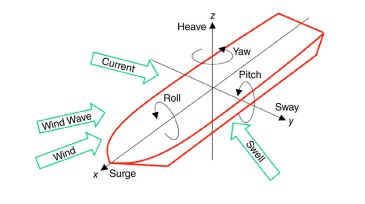
This paper describes a new application that leverages advanced machine-learning techniques in conjunction with metocean forecasts to predict vessel motions and thruster loads.
-
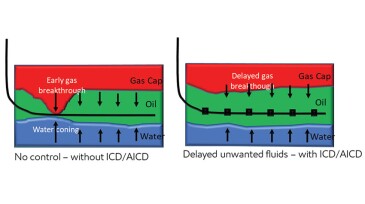
This paper provides insight into designing advanced well completions offshore West Africa with autonomous inflow control devices that enable maximizing the producing life of the wells under various challenging reservoir conditions.
-
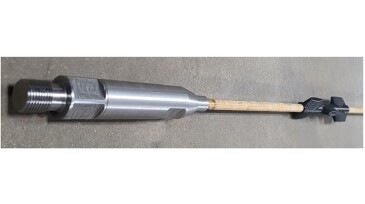
This paper explores the development of fiber-reinforced thermoplastic sucker rods as a promising alternative for overcoming the limitations of steel sucker rods and thermoset fiberglass sucker rods.
-
The industry’s vast untapped data resources have the potential to change how our industry works—if we can piece it together.