Testing page for app
-
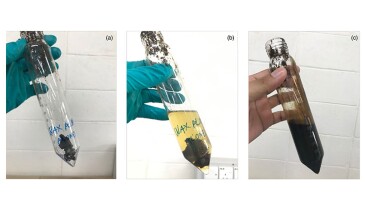
 This paper highlights a thermodynamic modeling approach used to determine the optimal depth for installation of a wax-inhibition tool.
 -
SPE technical papers synopsized in each monthly issue of JPT are available for download for SPE members for 2 months. These October and November papers are available now.
-
The authors of this paper describe a model-driven work flow developed for hydraulic fracturing design and execution that could be a resource for other shale plays with similar challenges worldwide.
-
This paper describes the evaluation of a recently developed robust solid dissolver that can dissolve multiple types of scale simultaneously.
-
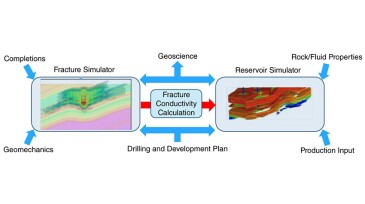
This paper presents a case study of integrated geomechanical and reservoir simulation with a developed fracture conductivity calculation work flow to evaluate well spacing and completions design.
-
In this paper, the authors evaluate the simultaneous optimization of CO2 storage and oil recovery using multiple injection strategies.
-
The purpose of hydraulic fracture modeling is to improve engineering decision-making. Success requires practical knowledge, engagement with real data, theoretical understanding, and critical thinking. The payoff is tremendous.
-
Oil is the bedrock on which modern society is built. The primary question remains: How can we continue to produce oil while minimizing its climate-harming byproducts? Thanks to the ingenuity of industry professionals around the world, new technologies are emerging that allow us to achieve this goal.
-
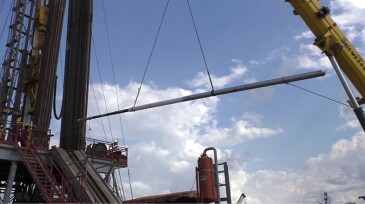
Prior to proceeding with a contract to fulfil a rigless P&A campaign for Sasol in Mozambique, BiSN designed a field trial to prove the effectiveness of its bismuth plug technology. Although the technology had been used in 19 countries by BiSN for a variety of downhole applications, it had not yet been qualified for use in Mozambique.
-
The authors of this paper write that computationally coupled models enable swift, accurate, and engineered decision-making for optimal asset development.