Testing page for app
-
-
 SPE papers and events that covered decarbonization during the past year show that a wide variety of solutions already exist that avoid, reduce, replace, offset, or sequester greenhouse gas (GHG) emissions. It is clear, therefore, that decarbonization technologies will now be as important as 4D seismic, horizontal wells, and hydraulic fracturing.
 -
How we think about the future of the pipe industry must evolve. How must tubular design and manufacturing change as we transition to clean energy? Geothermal energy is an area that needs attention and, further, needs very specific attention on tubulars.
-
The implementation of fishbone stimulation helped to more than double estimated well productivity and tripled the production rate in a tight carbonate reservoir well compared with conventional stimulation during initial testing.
-
The recent cyberattack on Colonial Pipeline’s IT system has thrust the issue of oil and gas industry cybersecurity into the spotlight, which, according to specialists in the field, is where it should always be.
-
New find could add 150 million BOE to reserves.
-
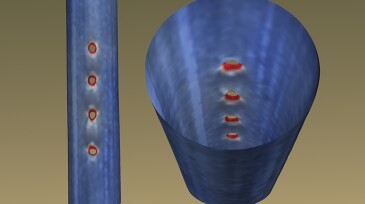
When fracturing, simply shooting all the perforations at the same spot in the casing can offer increased production at a low cost.
-
The paper describes an end-to-end deep surrogate model capable of modeling field and individual-well production rates given arbitrary sequences of actions.
-
The host FPSO will be one of the largest in Brazil.
-
This study in a shale-oil formation quantified the hydraulic fracture propagation process and described the fracture geometry by developing a geomechanical forward model and a Green’s function-based inversion model for low-frequency distributed acoustic sensing data interpretation, substantially enhancing the value of the LF-DAS data in the process.