Testing page for app
-
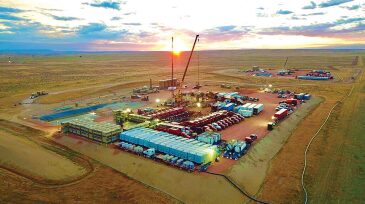
 The complete paper describes an offshore artificial island project northwest of Abu Dhabi in which drilling limits were extended continually by adopting new technologies and practices in an extended-reach-drilling (ERD) campaign.
 -
This paper discusses a new, comprehensive cuttings-transport model designed to enable safe and improved hole-cleaning operations.
-
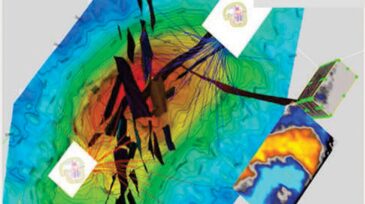
Present industry solutions to the challenge of well spacing involve expensive geomechanical Earth modeling or fracture-geometry monitoring that is time-consuming, data-intensive, and geography-specific.
-
The complete paper presents a set of two- and three-phase slug-flow experiments conducted in a 766-m-long, 8-in. pipe at 45-bara pressure.
-
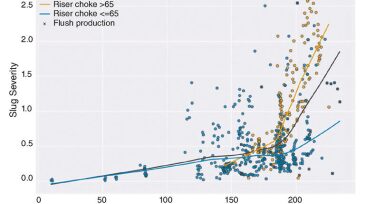
The complete paper discusses the successful application of a data-driven approach to analyze production data and identify root causes of slugging in a subsea production system on the Norwegian Continental Shelf.
-
The recurring long-term mitigation of slugging and various flow-assurance phenomena are challenging issues that demand attention and considerable technical effort. The three papers outlined here discuss slightly different issues and approaches to slug-flow phenomena and flow assurance.
-
The complete paper develops a plausible physical model of the experimentally observed pseudoslug liquid-holdup phenomenon and models physical and hydrodynamic behavior using a dimensional regression modeling approach.
-
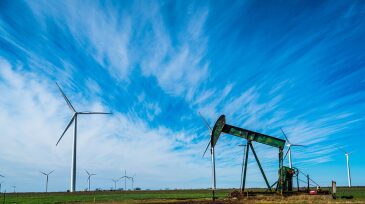
Many major oil and gas operators have announced their intentions to achieve various emissions goals. Obviously, the transition cannot be achieved with a simple flip of a switch and will require some time.
-
This is a particularly hard column to prepare. It is early October and I had hoped to tell you how being an SPE member and being an active part of SPE was part of your professional responsibilities/duty. It is, but we will save that discussion for later.
-
Groups of wells communicate, interfere, and hit each other. It is an unruly scene that can offer benefits. Three stories look at why competing fracture networks can add to the production from rock that might otherwise be missed.