

Latest News
-
 The authors present an artificial-intelligence and machine-learning technology to obtain a high-level, comprehensive view of all equipment in a facility to detect and map corrosion.
 -
It appears to be possible to sense how fractures change during production using ultrasensitive fiber-optic strain measurements.
-
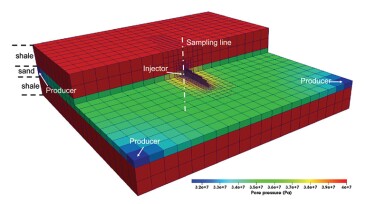
This paper introduces methods to fully couple reservoir simulation with wellbore flow models in fractured injection wells.
-
The authors describe a study in which leakage-rate modeling was performed to identify and evaluate the associated risks for designing a remedial action plan to safeguard a CO2 storage site.
-
When it comes to produced water from US shale plays, it’s either recycle and reuse or throw it away—and both are easier said than done.
-
This paper provides an alternative solution to identifying, classifying, and vertically distributing fractures and a lateral distribution method for reservoir modeling.
-
The paper demonstrates the ability of deep-learning generative models to enable new shale-characterization methods.
-
A new dose of constraint may just be the best prescription for those making reserves estimates on prospective unconventional resources.
-
The paper presents a model for shale gas production in which CO2 is injected by huff ’n’ puff into a hydraulic fracture surrounded by a shale matrix.
-
This paper describes a method to determine rig state from camera footage using machine-learning-based vision-analytics approaches.
-
This paper examines current practices and developing trends in well construction and describes an alternative cementless approach to the discipline.
-
This study explores pitfalls experienced when using capacitance/resistance modeling as a plug-and-play technique for waterflood optimization and discusses workarounds and mitigations to improve its reliability.







Explore Content by Discipline
Trending Content




Get JPT articles in your LinkedIn feed and stay current with oil and gas news and technology.