

Monthly Features
-
 Drilling experts recently shared candid views on what will be required for their segment of the upstream business to move to the next stage of development.
 -
 EQT is benchmarking its way to basin-leading productivity and relying on partnerships and new technology to turn KPIs into operational reality.
 -
 This case study from Italian technology developer Sentris highlights the effectiveness of using sensors during pigging operations to optimize cleaning efficiency.
 -
 Experts and industry leaders gathered in The Woodlands, Texas, recently to sift through the challenges of carbon capture, utilization, and storage. The puzzle is coming together, but some critical pieces are still needed before the results look like the picture on the box.
 -
 Two examples from ONGC show how supervised AI-driven automation scaled well modeling across hundreds of offshore wells, saving more than 1,000 engineering hours.
 -
 Examples demonstrate how an Integrated Operations Center as a Service (IOCaaS) model, powered by artificial intelligence, reduced costs by 5% and increased production by 6% in Canada.
-
 An ongoing research project started nearly 3 years ago by the US Department of Energy’s National Energy Technology Laboratory (NETL) is shedding new light on what really happens to foamed cement as it is pumped deep down offshore wells during completions.
 -
SPE’s technical directors are focused on problems that require working outside the bounds of their discipline.
-
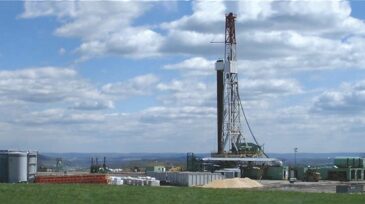
The rapid development of shale formations over the past decade has led the United States to become the world’s undisputed leader in natural gas production.
-
Well plugging and abandoning on a limited budget is a lofty goal that forces the industry to consider new ways and new materials. Cost-effectively dealing with this global problem will require developing tools to carry out the decommissioning without bringing in a drilling rig.
-
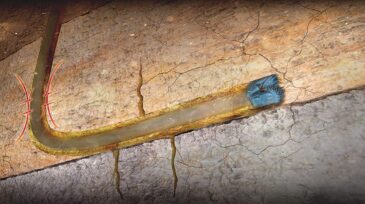
Making hole has become a more difficult and complex operation as operators move into untapped horizons, especially deepwater and unconventional fields.
-
In April, downhole chemical technology provider Flotek Industries acquired water-based, drilling fluid-additive technology from ARC Drilling Fluids.
-
Petroleum industry professionals reported an average total compensation of USD 214,328 in 2014, compared with 203,557 in 2013 and 223,472 in 2012.
-
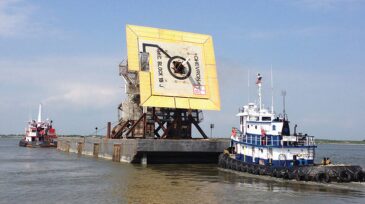
A strong reason for removing old platforms from the Gulf of Mexico, rather than trying to squeeze more years of marginal production out of them, is hurricanes.
-
Much of the new technology development occurring now is aimed at finding better ways to sever the thick, tough steel structures and wellheads so that they can be removed.
-
When he started his firm focused on removing obsolete offshore structures, Brian Twomey chose the name: Reverse Engineering Services. The thinking was that taking out a structure is like building it, but in reverse.




Explore Content by Discipline
Power Up With JPT Newsletters
JPT Newsletter (Weekly).
All the top stories, trends, and tech.
JPT Unconventional Insights (Monthly).
Fresh takes on shale and tight oil.
Get JPT articles in your LinkedIn feed and stay current with oil and gas news and technology.