

Monthly Features
-
 Oil prices are high, but spending has not caught up—yet. Meanwhile, exploration strategies are changing around the world toward a lower-risk model, and the frenzied pace of US M&A has very much cooled off.
 -
 This case study outlines a full-scale testing program focused on the behavior of thermal casing connections subjected to severe bending and low-cycle fatigue loading.
 -
 With millions of wells having been drilled in the US since the beginning of the oil age, the land is pocked with old, unused wellbores. For most, repurposing is a pipe dream. Plugging is the best option.
 -
 Disposal wells remain the lowest-cost solution for produced water, but concerns over seismicity and long-term sustainability are accelerating interest in alternatives.
 -
 This case study from Malaysia’s Petronas outlines a comprehensive review of perforation-charge testing across various tubular and reservoir conditions to help improve production from complex downhole scenarios.
 -
 As managed pressure drilling gains traction, its principles are influencing a wider range of well-construction activities.
-
 The recent cyberattack on Colonial Pipeline’s IT system has thrust the issue of oil and gas industry cybersecurity into the spotlight, which, according to specialists in the field, is where it should always be.
 -
When fracturing, simply shooting all the perforations at the same spot in the casing can offer increased production at a low cost.
-
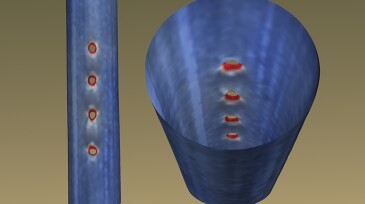
This study in a shale-oil formation quantified the hydraulic fracture propagation process and described the fracture geometry by developing a geomechanical forward model and a Green’s function-based inversion model for low-frequency distributed acoustic sensing data interpretation, substantially enhancing the value of the LF-DAS data in the process.
-
“What is the drilling state” has become an important question among data scientists and automation experts. The simplest definition of a complicated concept is that it is what the driller is doing at the time.
-
Case studies demonstrate how an autonomous outflow-control device prevents growth and excessive fluid injection into thief/fracture zones and maintains a balanced or prescribed injection distribution.
-
Can a camera on the drill floor, or one on a mobile phone, measure what is going on during drilling or evaluate drill-bit wear more consistently than a human?
-
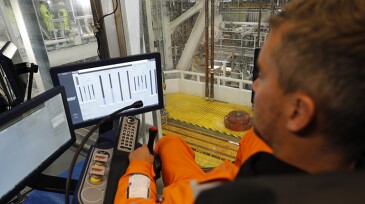
When Hess, Halliburton, and Nabors sat down to create a single plan to stream on the driller’s display, they needed to work out a lot of differences, including the definition of the word "activity."
-
It won’t happen overnight, but a growing number of US shale players are taking important steps to bring more automation and stage-level decision making to the hydraulic fracturing process in tight reservoirs.
-
As European majors push hard and fast to decarbonize energy and move into new and renewable sources, US majors are focusing on cleaner, more efficient hydrocarbons. Which approach and which companies will gain the upper hand?
-
SPYDR, MetaRock team up with Pioneer Natural Resources for a pilot program in the Permian Basin to test real-time fluid monitoring.






Explore Content by Discipline
Stay Ahead With JPT Newsletters
JPT Newsletter (Weekly).
Essential global industry news, technology developments, and market trends delivered to your inbox.
JPT Unconventional Insights (Monthly).
Global perspectives and expert analysis on shale, tight oil, and emerging unconventional plays.
Get JPT articles in your LinkedIn feed and stay current with oil and gas news and technology.