AI/machine learning

This research focuses on combining physics-based expert rules with machine learning to improve the detection of failure-related events in electrical submersible pumps.

A combination of physics principles and machine-learning techniques is used in this work to develop a virtual flowmeter for oil-production optimization in electrical-submersible-pump-lifted oil wells, resulting in reliable generalization.

This paper presents the deployment of an artificial intelligence-enabled autonomous gas lift optimization system, integrating real-time centralized advanced process control with cloud-based analytics to enhance artificial gas lift performance in producer wells.
-
 The authors write that even simple deep-learning architectures can identify a leak using pressure data.
 -
The authors demonstrate how artificial intelligence and machine learning can help build a purely data-driven reservoir simulation model that successfully history matches dynamic variables for wells in a complex offshore field and that can be used for production forecasting.
-
One of the major characteristics of petroleum data analytics is its incorporation of explainable artificial intelligence (XAI). Predictive models of petroleum data analytics are not represented through unexplainable black-box behavior. Predictive models of petroleum data analytics are reasonably explainable. This second part of a two-part series presents the use of XA…
-
One of the major characteristics of petroleum data analytics is its incorporation of explainable artificial intelligence (XAI). Predictive models of petroleum data analytics are not represented through unexplainable black-box behavior. Predictive models of petroleum data analytics are reasonably explainable. This first part of a two-part series presents the history of…
-
Being able to deploy machine-learning applications at the edge is the key to unlocking a multibillion-dollar market. TinyML is the art and science of producing machine-learning models frugal enough to work at the edge, and it's seeing rapid growth.
-
Earlier this year, 19 teams competed in a machine-learning contest held by the Data Analytics Study Group of SPE’s Gulf Coast Section. The was the first competition of its kind for SPE. Here, the organizers of the contest present some of the techniques used and lessons learned from the Machine Learning Challenge 2021.
-
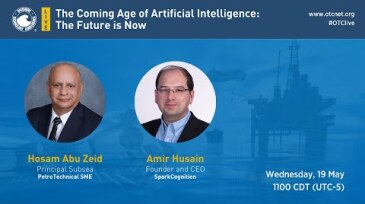
Amir Husain sat down with OTC Live to present the trajectory of artificial intelligence and how it will change the face of oil and gas.
-
The conventional wisdom about artificial intelligence is that bigger is better. But enormous neural networks come with some costs, including making it difficult for researchers to figure out how and why the software makes its predictions and decisions.
-
Physics-based simulations plus machine-learning exercises are yielding a more comprehensive look at production volumes from unconventional assets.
-
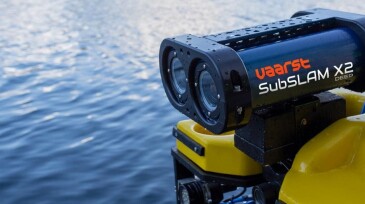
Vaarst, a spinoff from subsea robotic and hydrographic survey company Rovco, wants to accelerate advancement in ocean robotics by providing access to artificial-intelligence technology to marine and subsea providers for autonomous robotic work.