AI/machine learning

Known as Arena, the collaboration aims to improve decision-making across increasingly complex reservoirs and growing volumes of subsurface data.

Robotic and autonomous systems are transforming energy operations, but their full value emerges only when paired with data science, engineering analytics, and AI/ML to turn data into decisions. The transition of the SPE Robotic & Autonomous Systems Technical Section into the SPE Data Science & Engineering Analytics Technical Section helps bridge this critical technolo…
A credible custody-transfer record depends on far more than the accuracy of a single meter. It is the product of an integrated measurement chain. While meter performance supports measurement-system integrity, commercial confidence also depends on traceability, governance, and authorization.
-
 The industry’s vast untapped data resources have the potential to change how our industry works—if we can piece it together.
-
This paper presents the processes of identifying production enhancement opportunities, as well as the methodology used to identify underperforming candidates and analyze well-integrity issues, in a brownfield offshore Malaysia.
-
This paper delves into the evolving landscape of drilling automation, emphasizing the imperative for these systems to go beyond novelty and deliver quantifiable financial value.
-
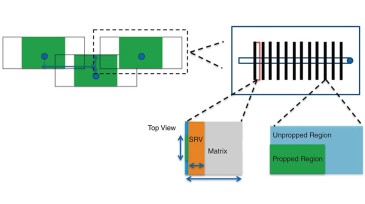
This paper presents a workflow that combines probabilistic modeling and deep-learning models trained on an ensemble of physics models to improve scalability and reliability for shale and tight-reservoir forecasting.
-
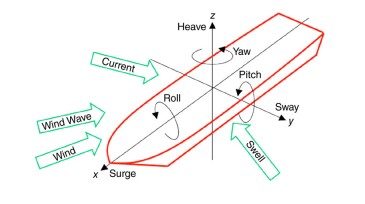
This paper describes a new application that leverages advanced machine-learning techniques in conjunction with metocean forecasts to predict vessel motions and thruster loads.
-
New and evolving artificial lift technology is helping operators improve production rates.
-
Collaboration and technology will help the industry meet its toughest challenges, experts said during the opening session at ATCE.
-
Accuracy, complexity, costs, and skills availability may make it difficult to get the most out of digital twins and even potentially misrepresent or miss actual changes in the status of systems or facilities.
-
The new contract extends a decadelong relationship and expands the use of AI and digital twins.
-
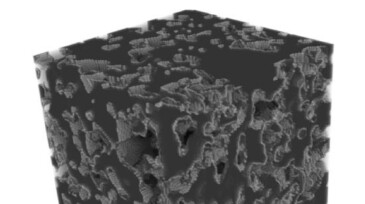
This paper presents a novel modeling framework for predicting residual oil saturation in carbonate rocks. The proposed framework uses supervised machine learning models trained on data generated by pore-scale simulations and aims to supplement conventional coreflooding tests or serve as a tool for rapid residual oil saturation evaluation of a reservoir.