AI/machine learning

Known as Arena, the collaboration aims to improve decision-making across increasingly complex reservoirs and growing volumes of subsurface data.

Robotic and autonomous systems are transforming energy operations, but their full value emerges only when paired with data science, engineering analytics, and AI/ML to turn data into decisions. The transition of the SPE Robotic & Autonomous Systems Technical Section into the SPE Data Science & Engineering Analytics Technical Section helps bridge this critical technolo…
A credible custody-transfer record depends on far more than the accuracy of a single meter. It is the product of an integrated measurement chain. While meter performance supports measurement-system integrity, commercial confidence also depends on traceability, governance, and authorization.
-
 Geolog and Petro.ai announced a strategic partnership to deliver data science products and services to the global energy industry.
-
With so much volatility in the sector, acutely felt by many western consumers, how are intelligent work flows enabling the shift toward alternatives?
-
Incorporating domain knowledge into your architecture and your model can make it a lot easier to explain the results, both to yourself and to an outside viewer. Every bit of domain knowledge can serve as a stepping stone through the black box of a machine learning model.
-
In this work, novel physics-based models and machine-learning models are presented and compared for estimating permanent-downhole-gauge measurements.
-
The AIoT has the potential to transform industries and society, and it is already starting to have an impact. This article will explore the principles of AIoT, its benefits, and its current use.
-
Supervised learning has many commercial applications; however, such learning lacks the capability to generate new insights and knowledge. In contrast, unsupervised learning discovers the inherent structures in unlabeled data, thereby helping generate new insights and actionable knowledge from large volumes of data.
-
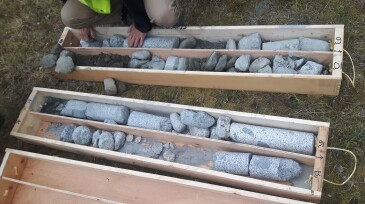
Researchers from Skoltech have trained a neural network to recognize rock samples in core box images efficiently. The process has sped up analysis by up to 20 times and made it possible to automate the description of rock samples.
-
Chief digital and information officer Sandeep Gupta's innovative use of technology has enabled the company to cut costs, reduce time to first oil, and manage decline in production.
-
The paper describes an approach to history matching and forecasting that does not require a reservoir simulation model, is data driven, and includes a physics model based on material balance.
-
The collaboration is planned to explore artificial intelligence in an effort to get more value from oil and gas operations and create a sustainable and carbon-efficient future for the energy industry.