AI/machine learning

As digital technologies become commonplace, industry leaders say core engineering knowledge remains essential for making informed decisions and avoiding costly mistakes.

The deals, with a potential value exceeding $3.7 billion, are aimed at strengthening Saudi Aramco’s supply chains and expanding its use of industrial artificial intelligence.

This work applies fuzzy logic, a well-established artificial-intelligence technique, to quantitatively assess connectivity between injectors and producers in a giant presalt field in the Santos Basin of Brazil.
-
 This paper provides an alternative solution to identifying, classifying, and vertically distributing fractures and a lateral distribution method for reservoir modeling.
 -
The paper demonstrates the ability of deep-learning generative models to enable new shale-characterization methods.
-
This paper describes a method to determine rig state from camera footage using machine-learning-based vision-analytics approaches.
-
This paper describes the current challenges faced by energy companies, the implications of observable industry trends, the characteristics that potential cybersecurity solutions must meet, and how artificial intelligence (AI) and machine learning (ML) can meet these requirements.
-
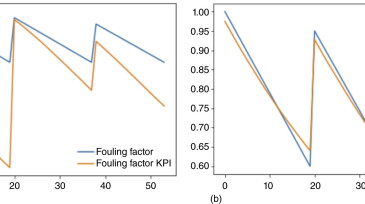
The machine-learning techniques applied in this study aim to deliver a fouling-prediction model based on both simulation and real-time field data.
-
The register aims to help the maritime industry embrace technology advances in artificial intelligence.
-
The most promising AI approach you’ve never heard of doesn’t need to go big.
-
The ethics of artificial intelligence (AI) has become an important topic in the application of AI and machine learning in the past several years. This second part of a two-part series presents the relevance and use of the ethics of AI in engineering applications. Part 1 explains the evolution and importance of AI ethics.
-
The ethics of artificial intelligence (AI) has become an important topic in the application of AI and machine learning in the past several years. This first part of a two-part series explains the evolution and importance of the ethics of AI. The second part will present its relevance and use in engineering applications.
-
The downtime of manufacturing machinery, engines, or industrial equipment can cause an immediate loss of revenue. Reliable prediction of such failures using multivariate sensor data can prevent or minimize the downtime. With the availability of real-time sensor data, machine-learning and deep-learning algorithms can learn the normal behavior of the sensor systems, dis…