Artificial lift
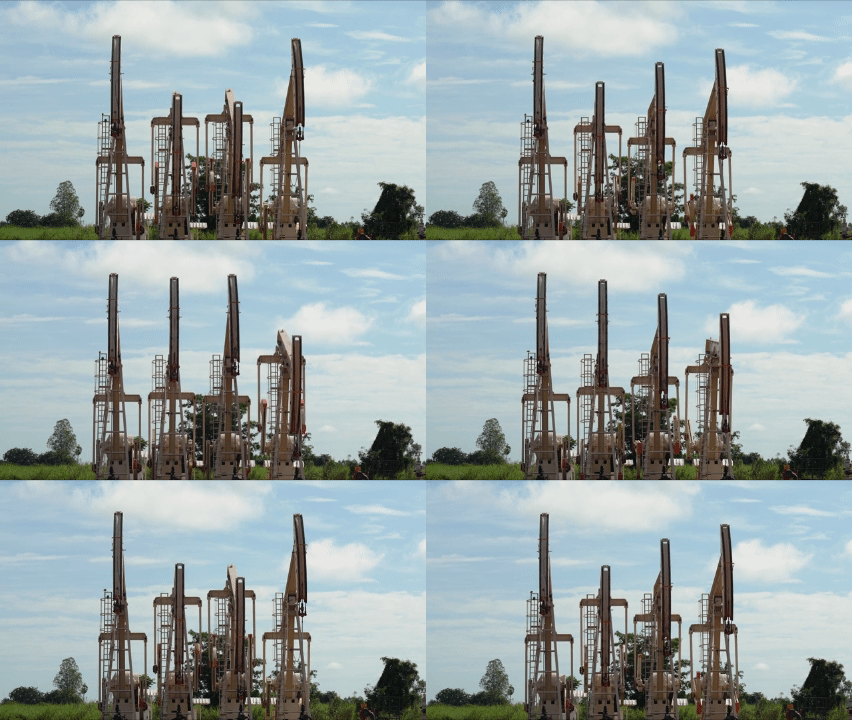
This paper proposes a novel, real-time pump failure prediction method using machine learning with scaled load ratio to accurately predict pump failures using only surface pump load data.

Production delivered by the subsea artificial lift system will equal that obtained by drilling two new wells, according to BP.

Examples demonstrate how an Integrated Operations Center as a Service (IOCaaS) model, powered by artificial intelligence, reduced costs by 5% and increased production by 6% in Canada.
-
 Different artificial lift technologies have been used for decades to dewater coalbed methane (CBM) wells to reduce hydrostatic pressure and release the gas for production.
 -
As oil and gas fields are depleted, artificial lift systems are often required to maintain delivery volumes and to maximize recovery.
-
The rapid growth of progressing cavity pumps is an example of how new uses continue to emerge for older technology.
-
Artificial-lift reliability is strongly influenced by how well the equipment is selected, designed, and operated for its particular application. The required artificial-lift knowledge is more than simply entering data into a software program or taking one class on the subject.
-
High-reliability gas lift flow-control devices (GLFCDs) enable gas lift for wells with the potential for H2S in the produced gas and where casing is not qualified for H2S service.
-
Recently, Quicksilver Resources and Eni E&P, through its subsidiary Eni US Operating, began a common effort to optimize production and lift costs in the Alliance shale-gas field in the prolific Barnett shale play in Texas.
-
Fall velocities for various plungers have been measured under many different field and simulator conditions. A new theoretical plunger-fall-velocity model uses a specific pressure and temperature for calibration.
-
Artificial lift systems arae among the most widely used production technologies in global oil and gas operations.
-
The selection criteria for multiphase boosting options remain somewhat subjective. A comprehensive literature review into the working principles of the major pump types identified the intrinsic advantages and limitations of each technology for subsea and downhole applications.