Completions

This edition highlights three offshore technology papers that address a common industry theme: how targeted engineering solutions can reduce uncertainty, shorten operations, and make technically constrained offshore well activities more executable.

Three papers are highlighted as the primary contributions because of their broad industry relevance. They focus on improving formation particle-size characterization, expanding the application of openhole gravel packs in depleted and compartmentalized reservoirs, and advancing the understanding of capillary pressure in sand production.

This paper aims to establish a set of best practices for generating particle-size-distribution data from core samples.
-
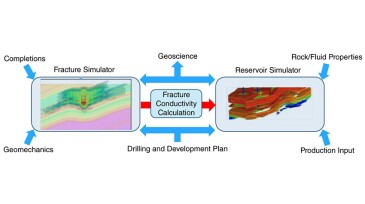
 This paper presents a case study of integrated geomechanical and reservoir simulation with a developed fracture conductivity calculation work flow to evaluate well spacing and completions design.
 -
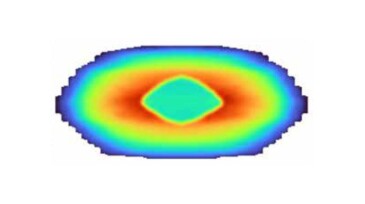
The purpose of hydraulic fracture modeling is to improve engineering decision-making. Success requires practical knowledge, engagement with real data, theoretical understanding, and critical thinking. The payoff is tremendous.
-
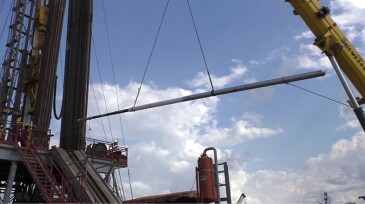
Prior to proceeding with a contract to fulfil a rigless P&A campaign for Sasol in Mozambique, BiSN designed a field trial to prove the effectiveness of its bismuth plug technology. Although the technology had been used in 19 countries by BiSN for a variety of downhole applications, it had not yet been qualified for use in Mozambique.
-
The authors of this paper write that computationally coupled models enable swift, accurate, and engineered decision-making for optimal asset development.
-
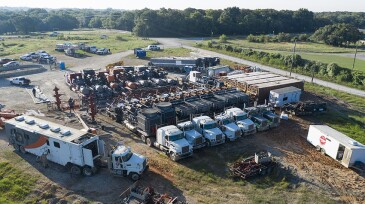
BKV Corp. has combined bullhead and liner refracturing methods to create an approach called the hybrid expandable liner system.
-
A new study from Saudi Aramco shows that the answer to the industry's billion-dollar corrosion problem might be sitting in your medicine cabinet.
-
The authors of this paper describe a coating designed for enhanced erosion resistance for standard wire-wrapped screens that consists of ceramic or hard metal applied by plasma spraying.
-
With the higher adaptation of flow-control devices in recent years to improve flow segmentation and reduce the premature failure of sand control because of highly localized flow, flow-control-device implementation is becoming an integral part of sand-management strategy.
-
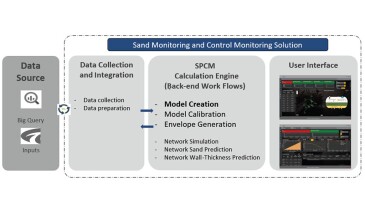
The authors of this paper propose an automated approach to sand prediction and control monitoring that improved operational efficiency by reducing time spent on manual analysis and the decision-making process in a Myanmar field.
-
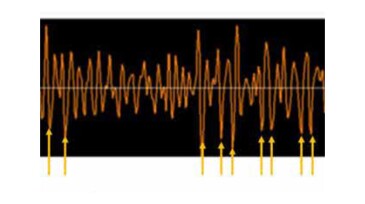
This paper discusses tools and techniques used to localize a tubing leak in a horizontally completed multilateral well, identifying the bore responsible for sand production and providing relative sand quantification at differing flow rates.