Completions

Chevron and Halliburton describe how they built and deployed the fully autonomous closed-loop fracturing system that enables subsurface-driven optimization.

Weatherford CEO Girish K. Saligram said the acquisition will bolster Weatherford’s completions offerings and unconventional reservoir capabilities.

Each of these papers presented at SPE conferences exemplifies the continued progress of industry solutions to maximize commercial value of basins within ever-changing oil and gas dynamics.
-
 The Midland-based service company operates a fleet that is now 65% either dual-fuel or electric-powered.
 -
The second major deal in the US proppant industry this year will see US Silica go forward as a private company.
-
This paper explains how an operator’s projects in the Vaca Muerta have become more-efficient and cost-effective by increasing production and reducing well-delivery-cycle time while fostering the long-term sustainability of the project.
-
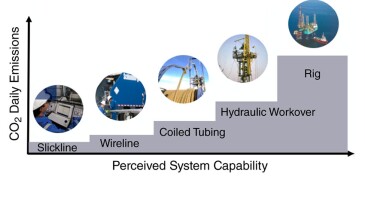
The authors challenge the traditional planning and execution of interventions, both from an operational and commercial standpoint, and examine where room exists for significant improvement in the industry
-
Despite tens of thousands of potential candidates and the proven upsides, the unconventional industry has largely overlooked refracturing—possibly due to the way it’s discussed.
-
To avoid costly interventions like sidetracking or wellbore abandonment, a check-valve system was installed near the sandface within three injector wells which prevented the mobilization of fines from the reservoir into the wellbore by stopping backflow.
-
Corrosion Inhibition of Benzyl Quinoline Chloride Derivative-Based Formulation for Acidizing ProcessDevelopment and implementation of a more effective and environmentally friendly acidizing corrosion inhibitor derived from benzyl quinoline chloride to mitigate rapid corrosion of metal-based drilling equipment.
-
This paper details a gravel packing operation in the Martin Linge field in the North Sea that marks the highest density carrier fluid openhole gravel pack completed successfully worldwide, setting a new standard for well completions in challenging high-pressure environments.
-
The tie between US crude output and key indicators such as rig counts and the number of new wells has significantly weakened.
-
High-pressure/high-temperature (HP/HT) resources continue to be a focus of efforts to apply new technologies that maximize productivity while addressing concerns related to capital expenditure, operating expenses, and high drilling costs. These cost-effective technologies will only grow in importance in exploiting HP/HT and ultra-HP/HT fields.